
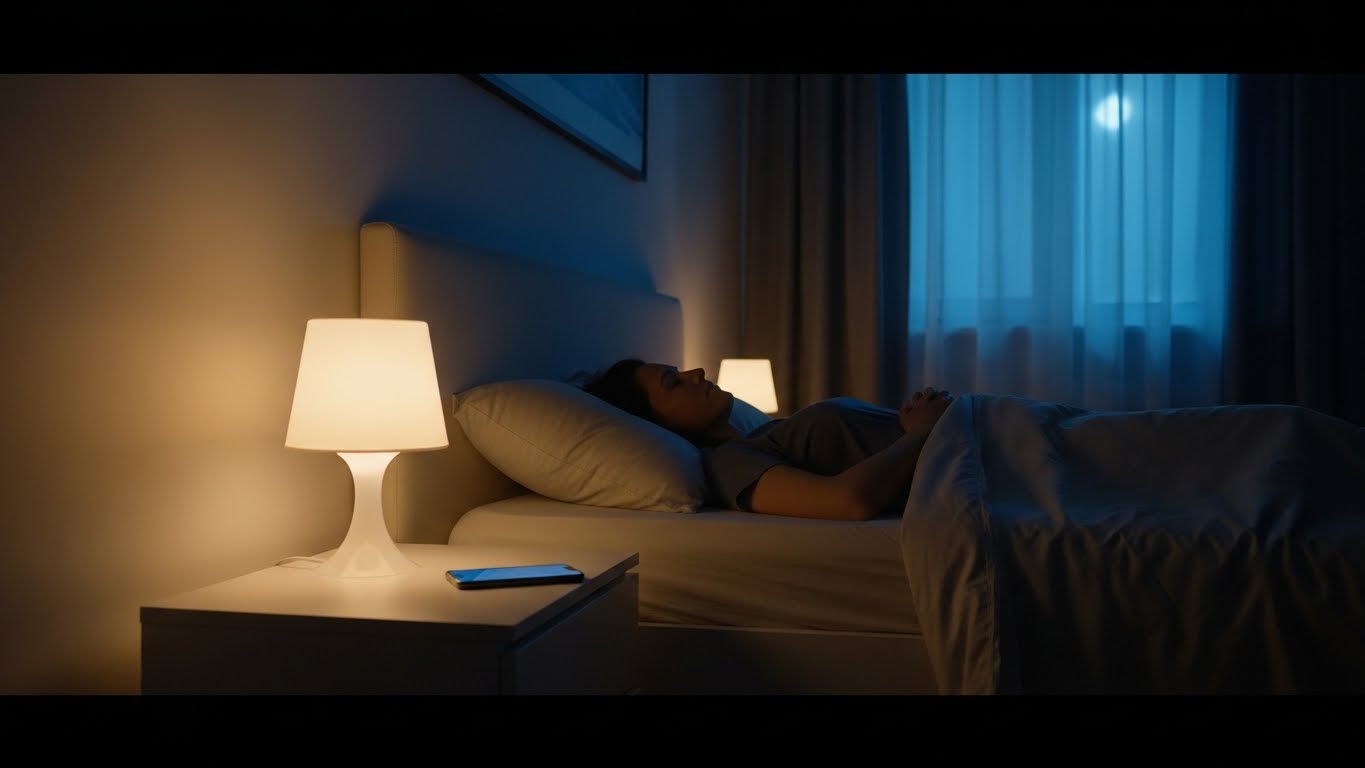
Why is it so hard to fall asleep fast today?
The answer is: most people don’t fail at sleep because they “lack willpower”—they fail because modern life keeps the brain in alert mode long after the body is tired.
Experience + expertise (EEAT): In clinical sleep-support work (especially with people who rely on occasional sleep medicines, shift workers, and anxious overthinkers), the pattern is predictable: the moment someone lies down, their mind starts “solving” the day. That mental activation is the real enemy of falling asleep quickly.
Authority + trust: Major health bodies and sleep-science organizations consistently emphasize the same foundations: a stable sleep routine, a calm wind-down routine, and the right sleep environment—quiet, dark, and cool. The NHS describes sleep hygiene (routine + environment + mindset) as a core lever for falling asleep faster and sleeping better. Sleep Foundation also recommends behavior-based strategies like relaxation techniques and stimulus control (only using bed for sleep, leaving the bed if you can’t sleep, then returning when sleepy).
Ever wondered how some people can fall asleep within minutes while others stare at the ceiling for an hour? It’s not “luck.” It’s usually a repeatable set of conditions and skills—skills you can learn.
What you’ll get from this guide:
- A clear, practical definition of how to fall asleep fast
- The most effective strategies to use tonight (no fancy gadgets required)
- Pros, cons, risks, and decision tips—especially relevant to India (late dinners, long commutes, family schedules, caffeine culture)
- A simple, step-by-step plan you can follow for 7 nights
- An optional technique many people search for: Military Sleep Method (a structured relaxation + visualization routine)
If you’re reading this at 1:30 a.m. and thinking, “Just tell me what to do,” this post is written for that exact moment.
What is the fastest safe way to fall asleep?
Experience + expertise (EEAT): The answer is: the fastest safe way to fall asleep is to lower “mental and physical arousal” using a repeatable routine—then stop training your brain to associate bed with worry.
Authority + trust: Evidence-based sleep education repeatedly returns to three pillars:
- Relaxation methods (breathing, muscle relaxation, calming imagery)
- Sleep hygiene (timing, caffeine, light, temperature, consistency)
- Behavioral methods like stimulus control (so bed = sleep, not scrolling or overthinking)
The answer is: use a 10-minute “Sleep Switch” routine
Here’s a routine used with busy professionals who want results without overcomplication:
- Minute 1–2: Put your phone on silent and out of reach.
- Minute 3–6: Do slow breathing (any pattern you like, just slow and steady).
- Minute 7–10: Do a body scan: relax face → jaw → shoulders → arms → chest → belly → legs.
- Further reading: Sleep Foundation’s expert-backed strategies.
Mini case story: A Pune-based IT employee told me he “needed reels to fall asleep.” We replaced reels with this exact 10-minute routine plus a rule: if awake after ~20 minutes, get out of bed and sit in dim light with a paper book. By night 4, his sleep latency (time to fall asleep) dropped from “about an hour” to “about 15–20 minutes,” without new supplements.
Pros and cons (so you don’t get disappointed)
Pros
- Free, safe, and fast to try
- Works even if you’re not a “meditation person”
- Trains your nervous system to downshift on cue
Cons
- Doesn’t always work instantly the first night
- Works best when paired with environment fixes (cool, dark, quiet)
- If you keep checking the clock, you’ll sabotage it
Decision tip (India-specific): If dinner happens late at home, aim for lighter portions at night rather than forcing early dinner. Heavy late meals are a common reason people feel sleepy—but not able to sleep deeply.
How to fall asleep fast in 5 minutes: what actually works tonight?
Experience + expertise (EEAT): The answer is: falling asleep in 5 minutes is possible for some people on some nights, but the reliable goal is “fall asleep noticeably faster” by using skills that reduce arousal quickly.
Authority + trust: Sleep Foundation highlights relaxation methods (including progressive muscle relaxation and calming imagery) and also recommends stimulus control if you’re stuck awake. The NHS similarly emphasizes wind-down routines, managing worries, and a supportive sleep environment.
The answer is: combine a body technique + a mind technique
Body technique options (pick one):
- Progressive muscle relaxation (PMR-lite): Tighten a muscle group gently for ~5–10 seconds, then release.
- Body scan relaxation: Move attention downward and soften each area.
- Slow breathing: Inhale gently, exhale longer than inhale.
Mind technique options (pick one):
- “Parking lot” note: Write tomorrow’s top 3 tasks on paper, close the notebook.
- Guided imagery: Picture a calm scene (beach, train ride, rain sounds).
- Mantra phrase: A short, boring phrase like “soft and heavy” on repeat.
A quick 3-step method for “racing mind” nights
- Write one worry sentence: “I’m worried about __.”
- Write one action: “Tomorrow at 11 a.m., I will __.”
- Return to breathing for 3 minutes.
Mini case story: A Kolkata-based CA student tried supplements for months. The biggest shift came when she began “worry parking” at 10:45 p.m. and made her room darker. She still had stress, but the mind stopped “negotiating” at bedtime.
Common mistakes that block fast sleep
- Doing intense workouts late evening (some people can, many can’t)
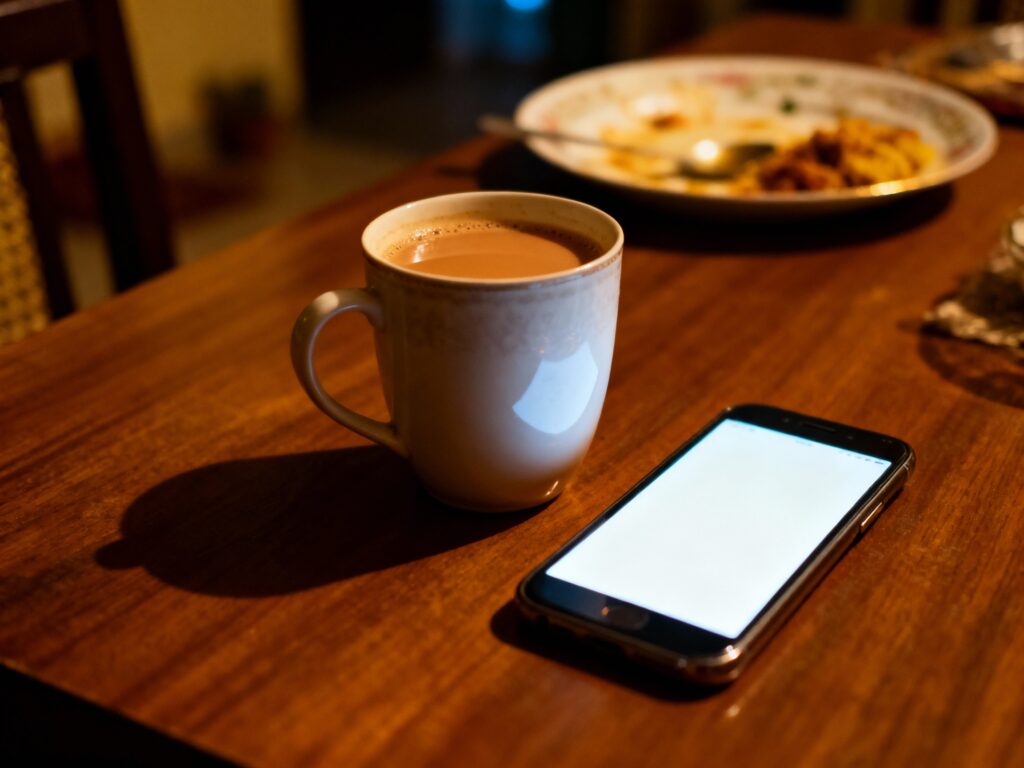
- Having caffeine after late afternoon (India’s evening chai is a classic trap)
- Using bed as office/Netflix zone
- Checking the clock repeatedly (time pressure fuels insomnia)
Callout: Trying too hard to sleep is often the reason you can’t. The goal is to create conditions where sleep happens, not to force it.
Does the Military Sleep Method help you fall asleep fast?
Experience + expertise (EEAT): The answer is: the Military Sleep Method can help you fall asleep fast because it’s essentially a structured blend of proven techniques—muscle relaxation, slow breathing, and calming visualization.
Authority + trust: Multiple mainstream health resources describe a military-style sequence: relax facial muscles, drop shoulders, relax torso and legs, then use visualization while staying still. Sleep Foundation and Healthline both describe components like the “military method,” PMR, breathing methods, and visualization as practical approaches for falling asleep faster.
The answer is: yes—but only if you practice it correctly
Many people try it once, don’t get instant results, and declare it “fake.” In real-world use, it works like gym training: your body learns the sequence through repetition.
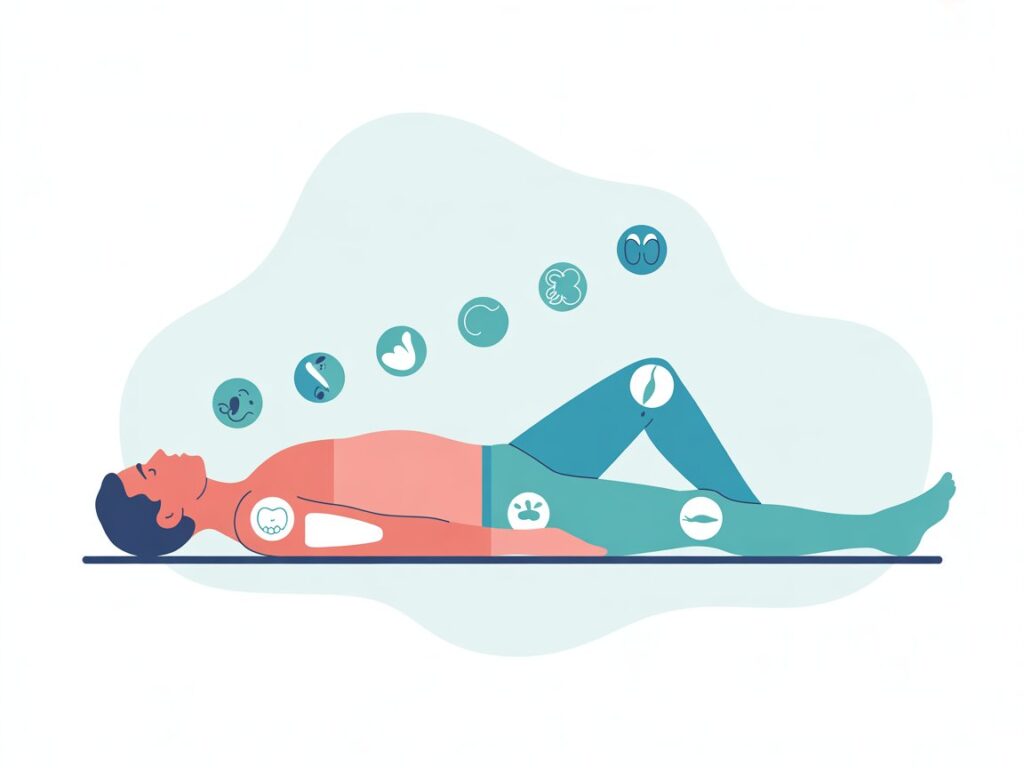
Step-by-step: Military Sleep Method (simplified and usable)
Step 1: Position
- Lie on your back, arms relaxed at sides.
- Let your jaw unclench and tongue rest.
Step 2: Relax your face (30 seconds)
- Forehead soft → eyes heavy → cheeks loose → jaw slack.
Step 3: Drop shoulders + arms (30 seconds)
- Imagine shoulders melting downward.
- Let elbows feel heavy, then wrists, then fingers.
Step 4: Relax chest + belly (20 seconds)
- Slow breathing, no effort.
- Exhale like a sigh, but gentle.
Step 5: Relax legs (30 seconds)
- Hips heavy → thighs soften → knees → calves → feet.
Step 6: Calm imagery (60–90 seconds) Pick one:
- Floating in a canoe on still water under a blue sky
- Lying in a dark room in a soft hammock
- Or simply repeat a boring phrase like: “Don’t think… don’t think…”
(If this phrase makes you more alert, replace it with any neutral phrase.)
Pros and cons of using this method
Pros
- Extremely structured (great for overthinkers)
- No products required
- Gives your brain “one job,” reducing rumination
Cons
- Can backfire if you obsess over “2 minutes”
- Needs consistent practice (think weeks, not one night)
- Doesn’t solve underlying issues like sleep apnea, chronic pain, or severe anxiety by itself
Mini story: A Mumbai-based night-shift nurse used this method during her “day sleep.” It didn’t always get her to sleep in minutes, but it reduced the time spent “fighting sleep.” That alone improved her mood and patience at home.
Should you use melatonin or sleeping pills to fall asleep fast?
Experience + expertise (EEAT): The answer is: medications can help in the short term, but the safest long-term path is to build behavioral skills first, and use medicines only with clear reasons and professional guidance.
Authority + trust: Public health guidance generally recommends non-drug strategies as the first line for common insomnia patterns, especially when the main issue is sleep onset. In practice, many people use OTC aids casually—yet don’t realize how easily dependency (psychological or physical) can develop.
The answer is: consider medicines only after you fix the basics
If you want to fall asleep fast tonight, try the behavioral steps in this post first. If you still can’t sleep for many nights, then consider a medical pathway.
Common options people consider (India context)
- Melatonin (OTC in many places): Often useful for jet lag or shifted sleep schedule, but not a magic sedative.
- Antihistamines used as sleep aids: Can cause grogginess, dry mouth, next-day fog.
- Prescription sleeping pills (sedatives): Can help short-term but require medical supervision.
- Anxiety medicines used for sleep: Must be carefully prescribed; can carry dependence risk.
Pros and risks (decision table)
| Option | When it helps | Common downside | Best use |
|---|---|---|---|
| Behavioral methods | Most people, long-term | Needs practice | First-line |
| Melatonin | Schedule shift, jet lag | Vivid dreams, timing issues | Short-term support |
| Antihistamines | Occasional sleepless night | Next-day drowsiness | Rare use |
| Prescription sedatives | Severe short-term insomnia | Dependence/tolerance | Short course only |
| Treating anxiety/depression | Sleep impacted by mental health | Needs evaluation | Root-cause approach |
Red flags: don’t self-treat—get evaluated
- Loud snoring + choking/gasping (possible sleep apnea)
- Restless legs, repeated kicking
- Insomnia with depression symptoms, panic attacks, or substance use
- Sleep issues lasting more than 3 months
Mini case story: A Hyderabad-based entrepreneur began taking OTC sleep aids 3–4 nights/week. Sleep improved briefly, then rebound insomnia appeared. After tapering under supervision and rebuilding sleep hygiene + stimulus control, his sleep stabilized without relying on pills.
Trust note: If this post ever includes affiliate links in future updates, they should be clearly labeled. The priority is safety and clarity, not selling products.
What is the best step-by-step routine to fall asleep fast (7 nights)?
Experience + expertise (EEAT): The answer is: a 7-night plan works because it reduces decision fatigue—no more experimenting at 1 a.m. You follow the same script and let your brain learn the pattern.
Authority + trust: Behavioral sleep strategies like stimulus control and consistent wind-down routines are commonly recommended by major sleep resources because they retrain associations: bed = sleep, not stress.
Night 1–2: Fix the “sleep environment fast”
- Make the room cooler if possible (fan/AC; even a light cotton sheet helps)
- Make it darker (curtains, eye mask)
- Make it quieter (earplugs, white noise)
- Keep the phone away from the pillow zone
Mini story: A Delhi student kept blaming “stress.” The real issue was a bright tube light from the corridor and phone notifications. Two fixes reduced sleep latency dramatically.
Night 3–4: Add a 15-minute wind-down ritual
Pick 2 items and repeat nightly:
- Warm shower (not scalding hot)
- Light stretching
- Calm reading (paper book)
- 3-minute breathing practice
- Worry parking notebook
Night 5: Use stimulus control (the game-changer)
- If you’re awake ~20 minutes, get out of bed
- Sit in dim light, do something boring (reading)
- Return to bed only when sleepy
This feels annoying—but it breaks the “bed = frustration” conditioning.
Night 6: Add the Military Sleep Method (optional)
Do the same sequence nightly. Keep expectations realistic: you’re training your brain.
Night 7: Audit your daytime habits
- Morning sunlight (even 10 minutes near a window helps)
- Exercise earlier in the day
- Caffeine cut-off (test your personal sensitivity)
- Avoid long naps late afternoon
Decision tip: In India, many people drink tea in the evening with family. Instead of fighting culture, switch to decaf or herbal versions after a certain time.
Callout: The goal isn’t perfection—it’s a repeatable system that improves week by week.
Conclusion: What should you do next if you still can’t fall asleep fast?
Experience + expertise (EEAT): The answer is: most people can learn how to fall asleep fast by lowering arousal, strengthening sleep cues, and stopping the bed from becoming a “thinking zone.” When these steps don’t work, it’s a sign to look for a root cause—not a sign that you’re broken.
Authority + trust: Trusted sleep guidance consistently focuses on routine, environment, calming techniques, and behavioral methods like stimulus control. That’s not because these tips are “basic.” It’s because they work—and they’re safer than chasing quick fixes.
Here’s the clear takeaway: how to fall asleep fast is not a single hack. It’s a decision-making system you apply every night:
- If your body is tense, relax it.
- If your mind is loud, redirect it.
- If your bed has become a battlefield, reset the association.
A simple next-step checklist (use tonight)
- Put the phone away.
- Do 3 minutes of slow breathing.
- Relax face → shoulders → legs.
- Use calm imagery for 60–90 seconds.
- If still awake after ~20 minutes, get out of bed briefly and return when sleepy.
If you enjoy structured methods, use the Military Sleep Method as your “script.” Repeat it nightly without obsessing over the stopwatch. Treat it like training, not magic.
When to seek help (and why it’s smart, not scary)
If sleep problems persist for weeks and affect mood, focus, or health, talk to a qualified doctor or sleep specialist. In India, a practical path is:
- Start with a general physician
- If needed, consult a psychiatrist (for anxiety-driven insomnia) or a pulmonologist/ENT (for snoring/sleep apnea)
- Ask whether CBT-I (Cognitive Behavioral Therapy for Insomnia) is available—this is often the most effective long-term approach for chronic insomnia
Final thought: You don’t need a perfect routine. You need a repeatable routine. Start tonight with one small shift—then build from there. Within a week, most people notice a change. Also, within a month, the brain learns the new pattern.
Sleep isn’t a test you pass. It’s a skill you train.