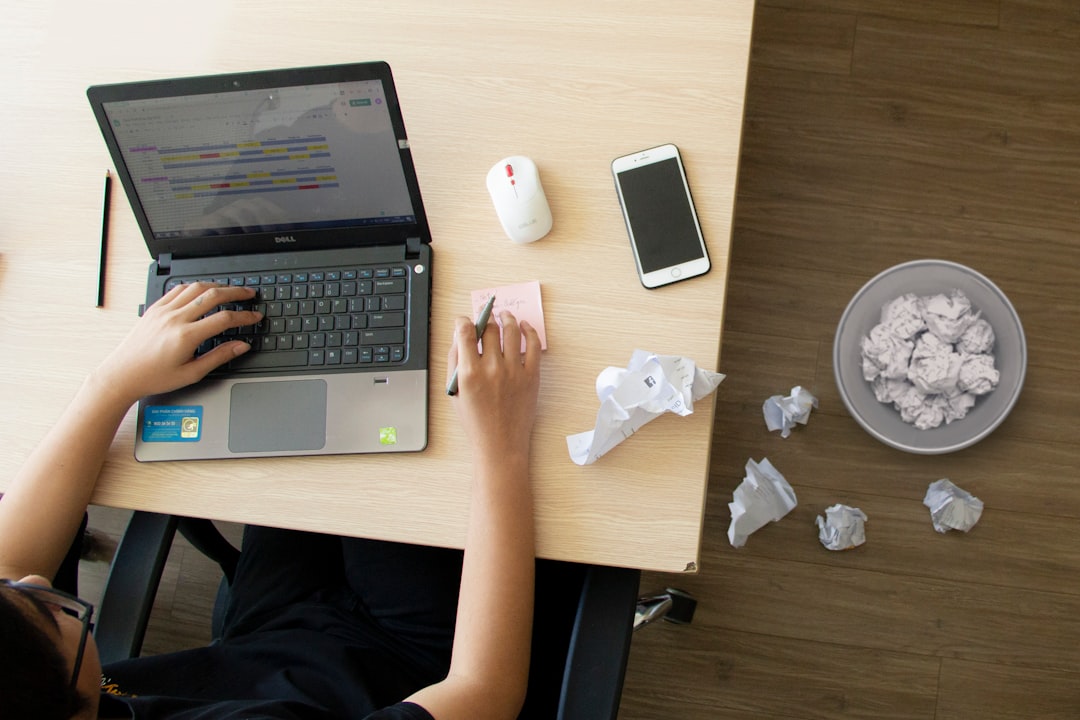
You sit down at your desk with the best intentions. You have one major task to complete—a proposal, a report, or a strategic plan that requires deep thinking. You open your laptop, take a sip of coffee, and type out the first sentence.
Then your phone buzzes.
You glance at the screen. It is just a group chat notification, but while your phone is in your hand, you check your email. That reminds you of an unanswered message on Slack, which leads to opening a browser tab to look up a quick reference. Twenty minutes later, you are browsing flight deals for a vacation you haven’t planned, while your primary task sits untouched.
This cycle is not a moral failing or a lack of self-discipline. It is the natural consequence of working in an environment engineered to fragment your attention. When you learn how to eliminate distractions quickly, you stop relying on fickle willpower and start using a repeatable operating system that protects your focus automatically.
Key Takeaway: Distraction is rarely an issue of willpower. It is an environmental and procedural issue. Fix the friction around your workflow, and deep focus becomes the path of least resistance.
The Real Cost of Interrupted Work
Every time you switch between your main task and an incoming alert, you pay a cognitive toll known as "attention residue." Research shows that when you switch from Task A to Task B, your attention does not immediately follow. A significant portion of your cognitive bandwidth remains stuck on the previous task, degrading your problem-solving ability and increasing the time it takes to produce quality work.
According to Asana's Anatomy of Work index, modern knowledge workers lose countless hours each week to "work about work"—constant context-switching, status updates, and notification firefighting—rather than high-impact execution.
When you constantly bounce between tabs and pings, your brain remains in a state of low-grade anxiety. You end the day mentally exhausted, yet wondering why your actual to-do list barely moved. To reverse this trend, you need a streamlined framework that cuts through noise at a moment's notice.
The 3-Step Focus Formula
This three-part framework works whether you have forty-five minutes between meetings or an entire afternoon reserved for deep work. It addresses the physical, mental, and procedural triggers that pull your mind away from high-priority tasks.
Step 1: Environmental Friction Engineering
Human beings are remarkably sensitive to friction. If an action is easy and immediate, we do it constantly; if it requires three extra steps, our brains resist it. Most people leave their greatest distractions zero clicks away and wonder why they struggle to maintain concentration.
The secret to setting up an environment that helps you eliminate distractions quickly is simple: increase friction on bad habits while reducing friction on deep work.
- The 20-Second Phone Barrier: Do not just set your phone face down on your desk. Put it in another room, place it inside a drawer, or use a timed lockbox. Adding just 20 seconds of physical effort to access your phone cuts impulse-checking by more than half.
- Single-Task Browser Workspaces: Close every tab not strictly required for your current deliverable. If you need reference material, save the links to a blank scratchpad document and close the browser window entirely.
- Full-Screen Mode: Hide your desktop icons, system clock, and application docks by putting your active software into true full-screen view. Out of sight truly means out of mind.
Step 2: The "Capture & Park" Protocol
Even in a distraction-free room, your internal thoughts can derail you. You suddenly remember that you need to buy laundry detergent, follow up with a client, or look up a recipe for dinner. When an unrelated thought strikes, the instinctive response is to act on it immediately so you don't forget.
The "Capture & Park" protocol stops this internal hijacking without losing good ideas:
- Keep a physical notebook or an empty digital scratchpad labeled Parking Lot directly beside your keyboard.
- When an unrelated thought or urgent impulse pops into your head, write it down in five words or fewer.
- Immediately return your eyes to your core task.
By writing it down, you close the cognitive loop. Giving your brain a trusted place to offload ideas allows you to eliminate distractions quickly without fearing you'll drop important tasks later in the day. You can review and organize these items during your scheduled administrative wrap-up using a structured daily time blocking routine.
Step 3: Time-Boxed Sprints with Visual Anchors
An open-ended task invites procrastination. When you tell yourself, "I'm going to work on this report until it's done," your brain senses an infinite timeline and seeks micro-escapes. When you define a rigid, short boundary, focus tightens instantly.
To run an effective sprint:
- Define the Micro-Goal: Instead of "work on presentation," write "outline slides 1 through 5."
- Set a Visible Countdown: Use a physical desk timer or a dedicated visual countdown app. Seeing minutes tick down creates a healthy sense of urgency.
- Commit to 25–45 Minutes: Keep sprints short enough that you never feel overwhelmed, but long enough to enter a state of flow. Many professionals combine this with adapted Pomodoro technique variations to maintain stamina throughout the afternoon.
Key Takeaway: A defined sprint with a specific finish line creates immediate psychological momentum. Open-ended work invites procrastination; tight time boxes demand focus.
Common Focus Traps (and How to Defeat Them)
Even with a solid system, unexpected interruptions will test your boundaries. Here is how to handle the two most common productivity traps.
Trap 1: The "Urgent Message" Illusion
We often convince ourselves that an immediate response is mandatory for team communication. In reality, very few work emergencies require a reply within thirty minutes. When every notification carries equal weight, everything feels urgent.
The Fix: Batch your communication. Turn off desktop banner alerts and schedule two to three designated check-in windows per day (for example, 11:00 AM, 2:00 PM, and 4:30 PM). Communicate this schedule to your team so expectations are transparent.
Trap 2: The "Just One Search" Rabbit Hole
You need a single statistic for a paragraph, so you open a search engine. Three clicks later, you are reading industry think pieces. If your goal is to eliminate distractions quickly during high-stakes work, visual triggers must be restricted.
The Fix: Leave a placeholder. Type [INSERT STAT HERE] in bold brackets and keep typing your core draft. Only conduct research during a dedicated editing phase once the raw thinking is complete.
Your 5-Minute Action Plan for Today
You do not need to overhaul your entire lifestyle to experience better concentration. You only need to run one clean sprint.
Here is what to do right now:
- Choose ONE critical deliverable you have been putting off. Write down exactly what "done" looks like for the next 30 minutes.
- Physically remove your phone from your workspace. Place it behind you, in a bag, or in another room on silent.
- Open a blank notepad for your "Parking Lot" and set a timer for 25 minutes.
By mastering these three pillars, you can eliminate distractions quickly and protect your most valuable cognitive hours whenever you sit down to work.

Written by
Indrajit Mukherjee
Engineer by education, passionate coder, stock market enthusiast, and lifelong learner. I write about Growth, Productivity, Money, and Sleep — sharing practical ideas, insights, and lessons to help you work smarter, build better habits, and live a more fulfilling life.