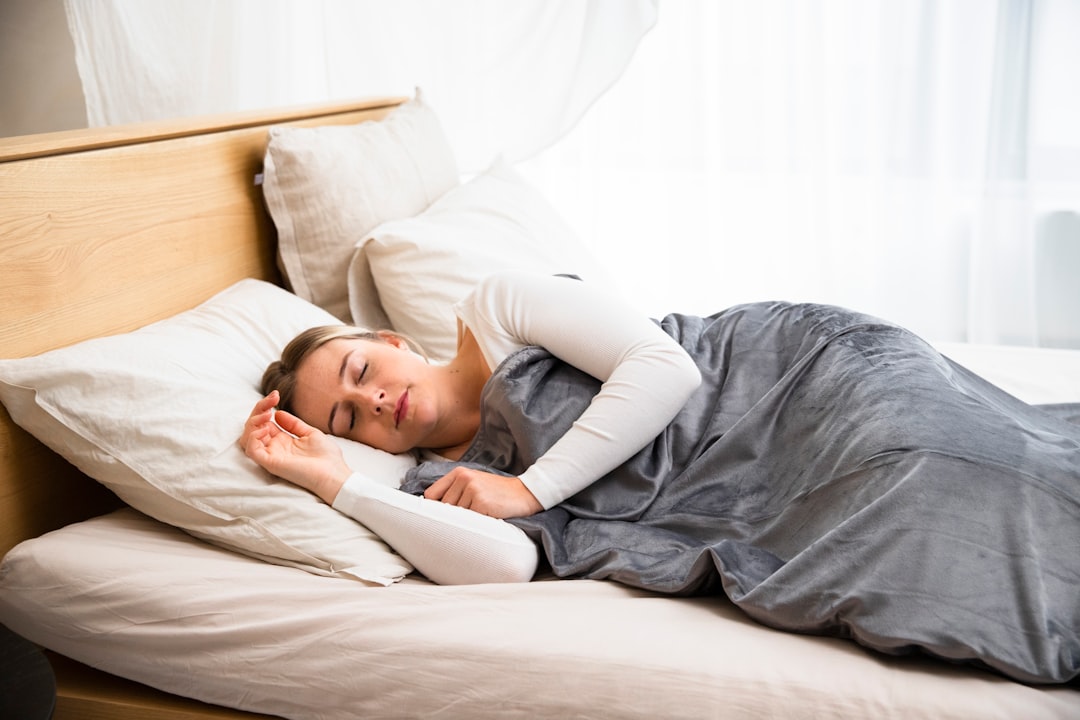
You jolt awake at 2:30 AM. Your heart is pounding against your ribs like a sledgehammer, your chest feels uncomfortably tight, and a surge of dread floods your brain. There is no intruder, no emergency siren, and no fire—yet your body is reacting as though you are running for your life.
If this scenario sounds familiar, you are experiencing nighttime anxiety attacks (often overlapping with nocturnal panic attacks). Unlike daytime stress, which usually comes with identifiable context—like a tense meeting or a pile of bills—waking up in pure physiological panic can leave you feeling confused, exhausted, and terrified of going back to sleep.
The good news? Your body is not broken. Your autonomic nervous system has simply tripped an alarm during a vulnerable neurological transition. By understanding the biology behind these episodes, you can deploy targeted, evidence-based tools to interrupt the panic loop in minutes and reset your sleep cycle.
Key Takeaway: Nighttime anxiety attacks are physiological surges, not personal failures. When you wake up panicking, your goal is not to analyze your thoughts—it is to manually signal safety to your nervous system through physical inputs.
Why Nighttime Anxiety Attacks Happen in the First Place
To stop an attack, it helps to understand why your brain sounds an alarm while you are completely unconscious. Most people assume sleep is a passive state, but your brain and endocrine system undergo intense recalibration throughout the night.
1. The Cortisol Awakening Curve and Early Surges
Under normal conditions, your body naturally releases cortisol—the primary alertness hormone—in the early morning hours to help you wake up (known as the Cortisol Awakening Response). However, chronic daytime stress, elevated baseline anxiety, or blood sugar instability can cause this cortisol spike to occur prematurely, often between 2:00 AM and 4:00 AM. When cortisol rushes into your bloodstream during deep sleep, it can trigger sudden tachycardia (rapid heart rate) and hypervigilance.
2. Sleep Stage Transitions and the Amygdala
According to clinical research on nocturnal panic attacks, these episodes most frequently happen during the transition from non-REM stage 2 sleep to deep stage 3 slow-wave sleep. During this phase, your heart rate and respiration drop quickly. If your brain perceives this rapid drop in physiological baseline as a threat (such as a drop in oxygen or shallow breathing), your amygdala triggers an emergency adrenaline dump to "rescue" you.
3. Latent Cognitive Processing
During the day, distractions keep worry at bay. But at night, your brain processes unresolved emotional inputs through memory consolidation. If you suppress chronic stress during waking hours, it frequently resurfaces as physical tension during light sleep.
Immediate, In-Bed Strategies to Stop an Attack in Progress
When you are in the middle of an acute episode, trying to "think positive" is nearly impossible because your prefrontal cortex (the logical brain) is temporarily offline. Instead, use these physical levers to manually stimulate the parasympathetic nervous system (the rest-and-digest response).
1. The Physiological Sigh
Developed by neurobiologists, the physiological sigh is the fastest autonomous method to drop heart rate and blow off excess carbon dioxide in real time.
- Take two distinct inhales through your nose: one deep breath, followed immediately by a sharp second top-off inhale.
- Open your mouth and perform a long, slow, audibly unforced exhale through your mouth until your lungs are empty.
- Repeat this cycle 3 to 5 times.
The second inhale reinflates the tiny air sacs (alveoli) in your lungs, improving oxygen exchange and instantly triggering the vagus nerve to slow down your pulse.
2. The Mammalian Dive Reflex
If your heart rate remains elevated, get out of bed and head to the bathroom sink. Fill your hands with ice-cold water (or grab an ice pack wrapped in a cloth) and press it against your eyes, temples, and upper cheeks for 15 to 20 seconds while holding your breath.
This action triggers the mammalian dive reflex, an evolutionary survival mechanism that immediately slows the heart rate by up to 25% and redirects blood flow from the extremities back to vital organs, rapidly blunting a panic response.
3. The 5-4-3-2-1 Sensory Grounding Technique
When panic makes your thoughts race into catastrophic territory, anchoring your attention to external reality breaks the feedback loop. Scan your bedroom and silently name:
- 5 things you can see: The shadow on the wall, the edge of the nightstand, the door handle, the carpet texture, the digital clock.
- 4 things you can physically feel: The weight of your duvet, the coolness of the pillowcase, your feet on the mattress, your breath passing through your lips.
- 3 things you can hear: The hum of the refrigerator, distant traffic, your own breathing.
- 2 things you can smell: Lavender pillow spray, fresh laundry, ambient room air.
- 1 thing you can taste: The residual taste of mint toothpaste or a sip of water.
4. Apply the 20-Minute Rule
One of the biggest mistakes people make when battling nighttime anxiety attacks is staying in bed, tossing, turning, and staring at the clock. This creates a conditioned association between your bed and fear.
If you have not fallen back asleep within 20 minutes, get out of bed. Move to a dimly lit room, sit in a comfortable chair, and read a physical, low-stimulation book or listen to calming audio. Return to bed only when your eyelids feel heavy.
Key Takeaway: Never fight an anxiety attack in bed. If your heart is still racing after several minutes, change your physical environment to break the conditioned panic response.
Preventive Evening Tweaks to Stop Attacks Before They Start
While in-the-moment tools are essential for damage control, preventing nighttime anxiety attacks requires proactive nervous system care during the hours leading up to bedtime.
1. Establish a 60-Minute Nervous System Decompression Routine
Going directly from high-stress work or intense social media scrolling straight into bed is an invitation for midnight panic. Create a structured wind-down window:
- Eliminate blue light: Turn off bright overhead lights 90 minutes before sleep. Blue wavelengths suppress melatonin and elevate cortisol.
- Engage in low-impact movement: Spend 5 minutes doing gentle restorative stretching or light foam rolling to release tension stored in the hips, shoulders, and jaw. For more restorative nighttime movement, explore our guide to evening stretching routines for better sleep.
- Temperature regulation: Take a warm shower or bath 60 minutes before bed. When you step out of the warm water, your core body temperature drops rapidly—a vital physiological signal that tells your brain it is time to sleep.
2. The Pre-Bed "Brain Dump" (Worry Journaling)
Cognitive overload is a major driver of nocturnal arousal. Keep a notebook on your desk (not your bedside table). About an hour before sleeping, spend 5 to 7 minutes writing down every task, anxious thought, or pending decision bouncing around in your mind.
Beside each item, write a single concrete next action you will take tomorrow. By externalizing these thoughts, you inform your subconscious that the problems are recorded and do not need to be monitored overnight.
3. Stabilize Nocturnal Blood Sugar
A sudden drop in blood glucose during the night triggers a counter-regulatory release of adrenaline and glucagon to prevent hypoglycemia. This adrenaline release can wake you up feeling sweaty, shaky, and panicked, directly mimicking a panic attack.
To prevent nocturnal glucose crashes:
- Avoid high-sugar snacks or refined carbohydrates within 2 hours of bedtime.
- If you frequently wake up hungry or jittery, eat a small pre-bed snack containing protein and healthy fats—such as a spoonful of almond butter or a small handful of walnuts.
- Cut off caffeine at least 8 to 10 hours before your target bedtime. If caffeine sensitivity is an issue, consider exploring our caffeine-free morning energy alternatives.
Long-Term Management and When to Seek Help
Occasional nighttime anxiety attacks can often be resolved with behavioral and lifestyle modifications. However, if you experience frequent panic attacks at night, it is important to address potential underlying clinical factors.
- Rule Out Sleep Apnea: Obstructive sleep apnea causes brief cessations in breathing, starving the brain of oxygen and causing severe panic-induced awakenings. If you snore, choke, or gasp for air, request a sleep study from your physician.
- Cognitive Behavioral Therapy for Insomnia (CBT-I) & Anxiety: CBT-I is the gold-standard treatment for chronic sleep disruption and nocturnal anxiety, helping reframe the fear of sleeplessness.
- Thyroid and Hormone Screening: Hyperthyroidism, perimenopause, and adrenal dysfunction can all masquerade as nighttime panic. A routine blood panel can identify or rule out these contributors.
Your Action Plan for Tonight
You do not need to overhaul your entire lifestyle in a single day to find relief from nighttime anxiety attacks. Start tonight with these three concrete steps:
- Set an ice pack and a glass of water by your nightstand so you have an immediate physical intervention ready if you wake up unsettled.
- Write out your 5-minute brain dump 45 minutes before turning off the lights to park your waking worries on paper.
- Practice 3 rounds of the Physiological Sigh the moment your head hits the pillow to establish baseline autonomic calm.
Nighttime panic is frightening, but it is ultimately a temporary physical response that you have the power to regulate. With consistent practice and the right somatic tools, you can retrain your body to view the night as a sanctuary of deep, restorative rest.

Written by
Indrajit Mukherjee
Engineer by education, passionate coder, stock market enthusiast, and lifelong learner. I write about Growth, Productivity, Money, and Sleep — sharing practical ideas, insights, and lessons to help you work smarter, build better habits, and live a more fulfilling life.