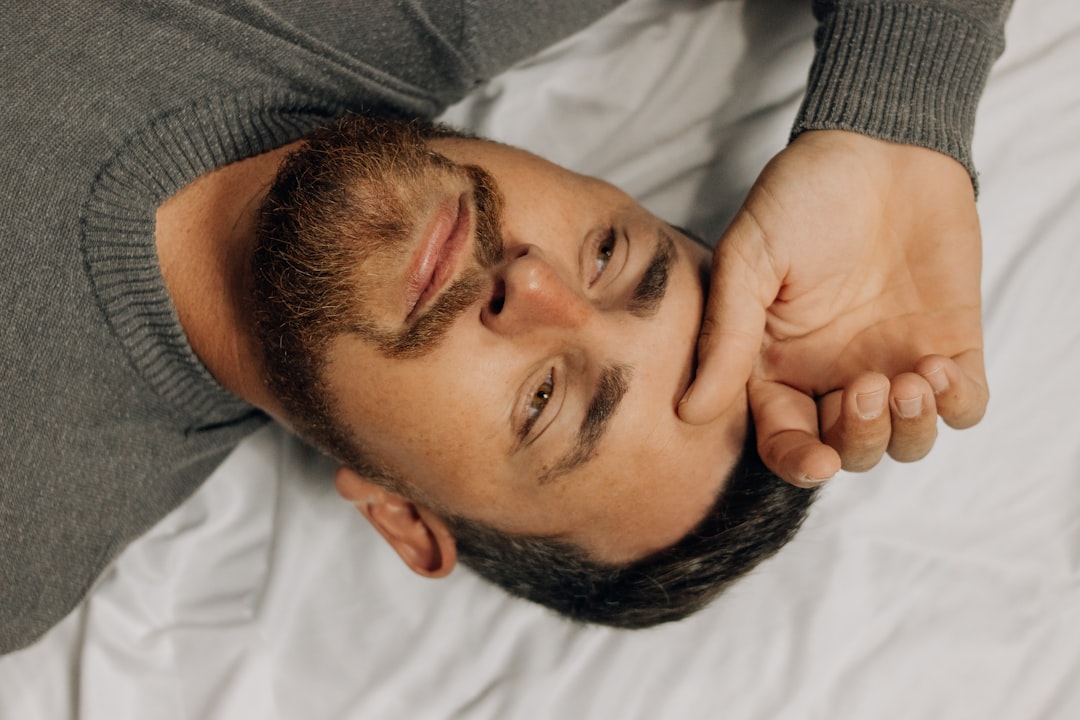
You know the math. You look at the clock at 11:15 PM, calculate that you have seven hours and forty-five minutes before your alarm, and close your eyes. Then you open them again at 11:48 PM, recalculating. By 12:30 AM, your brain is running a full audit of your life choices, your heart rate is climbing, and sleep feels further away than ever.
Trying harder to fall asleep is the single most reliable way to stay awake. Sleep is an involuntary biological process governed by your autonomic nervous system; the moment your conscious brain demands performance, your sympathetic nervous system ("fight or flight") kicks in, flooding your bloodstream with cortisol and adrenaline.
The target isn't zero minutes—dropping off the second your head hits the pillow is actually a symptom of severe sleep deprivation known as sleep drunkenness. Instead, healthy sleep latency—the time it takes to transition from full wakefulness to light sleep—sits between 10 and 20 minutes. With systematic conditioning, you can reliably land on the lower end of that window. By mastering physiological down-regulation and targeted fall asleep faster techniques, you can teach your nervous system to power down on demand.
Key Takeaway: Sleep cannot be forced; it must be invited. Quick sleep onset requires switching your autonomic nervous system from sympathetic dominance to parasympathetic tone while lowering your core body temperature.
The Physiology of Rapid Sleep Onset
Before testing specific drills, you need to understand the biological prerequisites for sleep. Your brain requires three distinct signals before it allows you to cross the threshold into Stage 1 non-REM sleep:
- Adenosine Accumulation (Sleep Pressure): Adenosine builds up in the brain every hour you remain awake. Caffeine blocks adenosine receptors, artificially masking this chemical fatigue.
- Circadian Phase (Melatonin Release): Governed by the suprachiasmatic nucleus, your biological clock triggers melatonin production roughly two hours before your natural sleep window, provided light exposure drops.
- Core Body Temperature Drop: Your internal thermostat must drop by approximately 1 to 2 degrees Fahrenheit (about 0.5 to 1 degree Celsius) to initiate sleep.
According to researchers at the Sleep Foundation's sleep latency analysis, understanding how these biological levers interact is the first step toward correcting prolonged wakefulness at night.
Somatic and Cognitive Fall Asleep Faster Techniques
When you are lying in bed with a racing mind, traditional advice like "just clear your head" fails because the brain cannot easily suppress thoughts on command. Instead, you must give your attention a low-stakes, repetitive physiological task. Here are three clinically validated methods to quiet your nervous system.
1. The Military Sleep Method (Refined)
Originally documented by Lloyd Bud Winter in the 1981 book Relax and Win: Championship Performance, this routine was developed for pre-flight naval pilots dealing with combat stress. The goal is progressive neuromuscular release paired with cognitive diversion:
- Step 1: Facial Decompression. Relax the 43 muscles in your face. Consciously drop your jaw, let your tongue rest flat on the floor of your mouth, and soften the micro-tensions around your eye sockets and forehead.
- Step 2: Shoulder and Arm Drop. Exhale deeply and drop your shoulders as low as they will go. Allow your dominant arm to go limp—bicep, forearm, hand, fingers—then repeat with your other arm.
- Step 3: Chest and Torso Release. Let your chest sink into the mattress on a long, slow exhale. Release any residual abdominal tension.
- Step 4: Lower Extremity Relaxation. Release your thighs, let your calves go heavy, and feel your ankles and feet sink downward.
- Step 5: The 10-Second Mental Clear. For ten seconds, picture yourself lying in a dark room in a comfortable hammock, or repeat the phrase "don't think" steadily. If thoughts intrude, acknowledge them without judgment and return to the visualization.
2. The Double Inhale "Physiological Sigh"
While the popular 4-7-8 method works well for many, some people find holding their breath for seven seconds induces subtle air hunger and mild anxiety. A faster, more direct neurological tool is the physiological sigh, a pattern identified in respiratory physiology that rapidly slows heart rate.
Take two quick sniffs through your nose—one deep breath followed immediately by a sharp top-up sniff to fully inflate the alveoli in your lungs—then execute a long, unforced exhale through your mouth for six to eight seconds. Performing just three to five cycles triggers immediate parasympathetic activation via the vagus nerve, dropping your pulse and prepping your brain for sleep.
3. Cognitive Shuffling (Serial Diverse Imagining)
Developed by cognitive scientist Dr. Luc Beaudoin, cognitive shuffling breaks the analytical loops (planning, worrying, organizing) that keep the prefrontal cortex active. When your brain recognizes random, non-threatening imagery, it determines the environment is safe for sleep.
Pick a neutral, four-to-six-letter anchor word—like DREAM. Take the first letter, D, and mentally visualize distinct objects starting with D: Door, Dolphin, Drum, Donut. Picture each for a few seconds until you run out of words. Move to R: Radio, River, Ribbon, Robot. Most people do not make it past the third or fourth letter before drifting into micro-dreams.
Environmental Levers to Speed Up Sleep Onset
Using mental drills while your physical environment signals wakefulness is an uphill battle. Layering the right sensory cues creates an automatic conditioned response over time.
The Thermal Trigger: Hot Showers and Cool Sheets
Because your body must drop its core temperature to sleep, you can manipulate your vascular system to accelerate the process. Taking a warm shower or bath 60 to 90 minutes before bed causes vasodilation—blood vessels in your hands, feet, and skin open wide. When you step out into a cooler room, that heat rapidly radiates out of your body, causing your internal temperature to plummet. Pair this with a bedroom thermostat set between 65°F and 68°F (18°C to 20°C) for optimal results.
The Light Curve
Melatonin suppression is directly linked to the intensity and spectrum of light entering your eyes during the final two hours of the day. You don't necessarily need to sit in the pitch dark, but you should shift to low-level, warm-spectrum lighting (under 2700K) at lamp level rather than overhead fixtures. Integrating this into optimizing your evening wind-down routine gives your brain the chemical green light to initiate drowsiness long before your head hits the pillow.
Key Takeaway: Rapid sleep onset is 80% preparation and 20% in-bed technique. If your core body temperature and ambient light aren't dialed in, cognitive drills will take twice as long to work.
Behavioral Conditioning: The Stimulus Control Protocol
If you have spent months tossing and turning, your brain has developed a Pavlovian conditioned response: Bed = Frustration and Alertness. To reverse this, sleep specialists use Stimulus Control Therapy, one of the foundational pillars of Cognitive Behavioral Therapy for Insomnia (CBT-I).
The 20-Minute Ejection Rule
If you are still awake after roughly 20 minutes (do not watch the clock—gauge this by feel), get out of bed. Remaining in bed while agitated solidifies the link between your mattress and wakefulness. Move to a dimly lit chair in another room and engage in a low-stimulation activity: read a physical book, listen to an ambient track, or try cognitive shuffling sitting up. Return to bed only when your eyelids feel heavy.
By strictly enforcing this boundary, you teach your brain that lying in bed leads exclusively to unconsciousness. You can explore complementary strategies for managing nighttime cortisol spikes if physical tension remains your primary obstacle when trying these fall asleep faster techniques.
Sample 30-Minute Protocol for Rapid Sleep
To put these concepts into practice tonight, follow this sequenced timeline:
| Time Before Bed | Action Step | Biological Goal |
|---|---|---|
| T-60 Minutes | Warm shower + lower household lights | Initiate core body cooling and natural melatonin release |
| T-30 Minutes | Screens off; switch to low-intensity analog activity | Eliminate blue light input and cognitive overstimulation |
| T-0 Minutes | Get into a cool bed (65–68°F) | Maximize physical comfort and thermal regulation |
| In Bed (Min 1–3) | 3–5 Physiological Sighs | Trigger immediate vagal nerve tone and reduce heart rate |
| In Bed (Min 3–7) | Military Progressive Relaxation | Release involuntary muscle guarding in face and shoulders |
| In Bed (Min 7–10) | Cognitive Shuffling | Disrupt linear thinking and slip into hypnagogic state |
What to Do Tonight
You do not need to overhaul your entire lifestyle to see a noticeable improvement in sleep onset tonight. Start with one simple, high-leverage change right now:
Set a reminder on your phone for 90 minutes before your target bedtime. When it chimes, drop your bedroom thermostat to 67°F, take a 10-minute warm shower, and turn off all overhead lights in favor of low table lamps. When you get into bed, execute five physiological sighs followed by the Military Method's facial release. Consistently practicing these fall asleep faster techniques rewires your nighttime physiology and turns falling asleep into a predictable, automatic reflex.
If you want to build a truly bulletproof sleep sanctuary, consider setting up an ideal sleep environment to eliminate micro-distractions that pull you back to the surface just as you're drifting off.

Written by
Indrajit Mukherjee
Engineer by education, passionate coder, stock market enthusiast, and lifelong learner. I write about Growth, Productivity, Money, and Sleep — sharing practical ideas, insights, and lessons to help you work smarter, build better habits, and live a more fulfilling life.