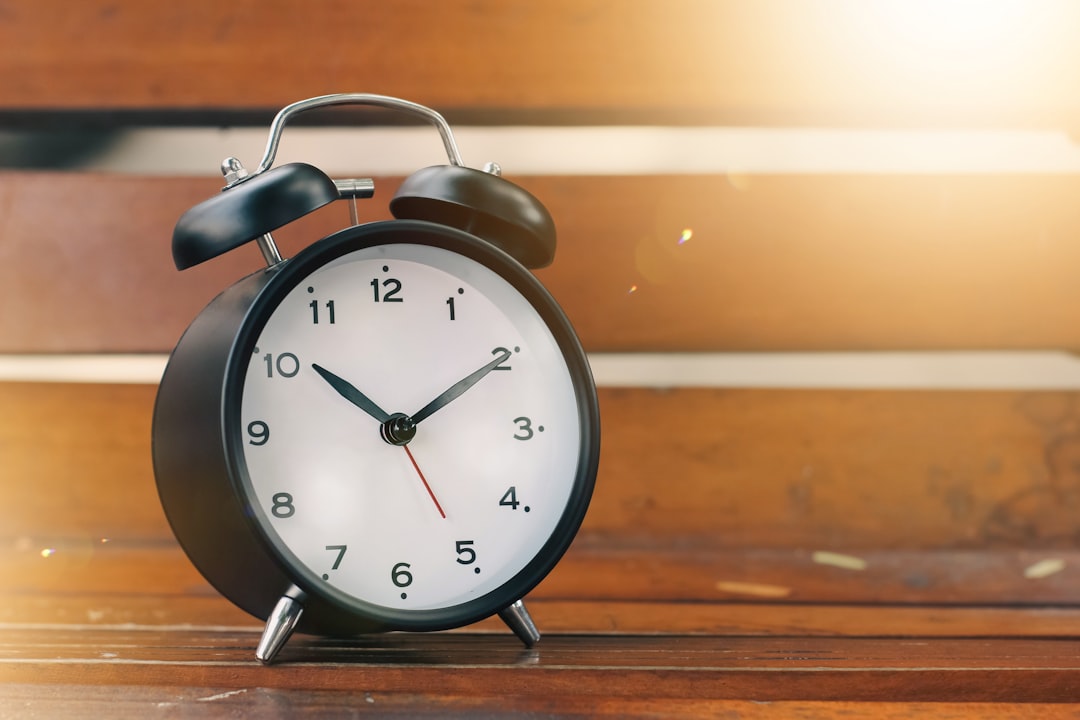
It happens with infuriating precision. Your eyes snap open, the room is pitch black, and a quick glance at the clock confirms your dread: it is 3:14 AM. You were exhausted when you went to bed, but now your brain is humming at full frequency, replaying a conversation from three years ago or calculating how miserable you will feel during your 9:00 AM meeting.
If you find yourself waking up at 3 am on a regular basis, you are far from alone. Nocturnal awakenings are among the most common sleep complaints reported by adults. According to research published by the Sleep Foundation on waking up in the middle of the night, nearly a third of adults experience regular nocturnal awakenings, often during the transition between sleep cycles.
The problem usually isn't the wake-up itself—it is the spiral of panic, cognitive hyperarousal, and counterproductive habits that keep you awake for hours afterward. Here is an evidence-based roadmap to understand why this happens and exactly how to fall back asleep quickly.
Key Takeaway: Waking up briefly between sleep cycles is a normal biological phenomenon. The goal isn't to force yourself to stay completely unconscious all night—it is learning to keep your nervous system calm so you drift seamlessly back into sleep.
Why You Keep Waking Up at 3 AM: The Biology Explained
To fix the issue, you first need to understand why 3:00 AM is such a common disruption point. It isn't supernatural; it is pure chronobiology.
1. The Shift in Sleep Architecture
Human sleep is composed of 90- to 110-minute cycles. During the first half of the night (typically 10:00 PM to 2:00 AM), your body prioritizes Stage 3 Non-REM (N3) slow-wave deep sleep. This is when physical repair and cellular maintenance occur. As the night progresses into the early morning hours, your sleep architecture shifts drastically: slow-wave deep sleep decreases, and periods of Rapid Eye Movement (REM) and light Stage 2 sleep become longer.
Because you spend the second half of the night in lighter sleep states, slight environmental cues—a subtle temperature shift, traffic noise, or natural bodily movements—can easily pull you into consciousness. If your overall sleep hygiene routine has subtle gaps, this lighter sleep stage is where they will surface.
2. The Cortisol and Blood Sugar Axis
Around 3:00 to 4:00 AM, your core body temperature hits its lowest trough, and your endocrine system initiates a gradual preparation for the coming day. If your blood glucose dips too low overnight—often caused by eating a heavy, high-glycemic dinner or drinking alcohol close to bedtime—the body releases counter-regulatory hormones like adrenaline and cortisol to mobilize glycogen reserves. This sudden hormonal surge stimulates your sympathetic nervous system, causing an abrupt awakening accompanied by an elevated heart rate.
3. The "Middle-of-the-Night Anxiety" Phenomenon
When you wake up in the middle of the night, your prefrontal cortex—the brain's logical, rational control center—is largely offline, operating at a metabolic fraction of its daytime state. Meanwhile, the amygdala (the brain's threat-detection hub) remains reactive. This biological imbalance explains why minor issues suddenly feel like catastrophic emergencies when waking up at 3 am.
The 5-Step Emergency Protocol to Fall Back Asleep Fast
When you find yourself staring at the ceiling, your immediate response determines whether you will be awake for ten minutes or three hours. Follow this step-by-step protocol to reset your nervous system.
1. Do Not Check the Time
The single most destructive action you can take upon waking up is looking at your phone or bedside clock. The moment you see "3:17 AM," your analytical mind kicks into gear: "If I fall asleep right now, I get 3 hours and 13 minutes of sleep. If I don't, my whole day is ruined."
This triggers performance anxiety around sleep, elevating your heart rate and flooding your system with noradrenaline. Turn your alarm clock around so the display faces the wall, and charge your phone across the room.
2. Use the Physiological Sigh to Disengage Fight-or-Flight
If your body feels tense or your heart is beating fast, cognitive reframing alone will not work; you must use a somatic, bottom-up approach to slow your autonomic nervous system. The most efficient tool is the physiological sigh:
- Take two consecutive inhales through your nose: one deep inhale to fill the lungs, followed immediately by a short, sharp "top-off" inhale to open collapsed alveoli in the lungs.
- Exhale slowly and completely through your mouth with a soft "sigh" sound, making the exhale twice as long as the inhale.
- Repeat this sequence 4 to 6 times.
Extended exhalations activate the vagus nerve, sending an immediate chemical signal to the sinoatrial node in your heart to decelerate your pulse.
3. Deploy the "Cognitive Shuffle" (Serial Diverse Imagining)
Once your body is physically relaxed, you need to prevent your mind from engaging in structured, analytical thoughts. Cognitive scientist Luc Beaudoin developed the "Cognitive Shuffle" to mimic the random imagery that naturally precedes sleep onset.
Here is how to do it:
- Pick an emotionally neutral, four-to-six-letter word (e.g., B-E-D or C-A-L-M).
- Take the first letter, C. Visualize as many distinct words starting with C as possible, visualizing each object for a couple of seconds before moving to the next: Cat, Castle, Cucumber, Candle, Cloud.
- When you run out of words for C, move to A: Apple, Anchor, Accordion, Attic.
- Continue down the letters until you drift off.
This process breaks the default mode network (the brain circuit responsible for rumination) by feeding your cortex random, low-threat micro-images, signaling to your brain that it is safe to cross the threshold into sleep.
4. The 20-Minute Stimulus Control Rule
If you have been lying in bed for what feels like 20 minutes and feel wide awake or agitated, get out of bed.
One of the foundational tenets of Cognitive Behavioral Therapy for Insomnia (CBT-I) is stimulus control. If you stay in bed tossing, turning, and stewing in frustration, your brain creates a subconscious neuro-association between your mattress and high-alert vigilance. Bed must equal sleep—not stress.
- Get up and move to a dimly lit room or comfortable chair.
- Keep lights dim and warm (avoid blue overhead lights; use a small lamp or amber book light).
- Engage in a low-stimulation, screen-free activity: read a boring non-fiction book, listen to an ambient soundscape, or practice gentle somatic stretches.
- Return to bed only when your eyelids feel heavy and you experience unmistakable sleepiness.
5. Progressive Muscle Relaxation (PMR)
Physical tension often flies under the radar when waking up at 3 am. Even if you think you are resting calmly, your jaw might be clenched, your shoulders raised, or your hip flexors tight. Combining PMR with your favorite breathwork for stress relief can accelerate deep somatic relaxation.
Starting at your feet, tightly curl your toes for 5 seconds, noticing the sensation of tension. Release completely on an exhale, allowing the muscles to sink into the mattress for 10 seconds. Slowly work your way up: calves, thighs, glutes, abdomen, chest, hands, shoulders, neck, jaw, and brow. By actively contrasting muscular contraction with relaxation, you trigger systemic muscular flaccidity that promotes sleep entry.
Key Takeaway: Never stay in bed struggling. If you aren't asleep after approximately 20 minutes, leave the bedroom and engage in low-arousal, screen-free activities until genuine sleep pressure returns.
Common Traps That Guarantee You Stay Awake
When you are half-asleep and frustrated, instinct often steers you toward behaviors that actively prolong insomnia. Avoid these four common missteps:
- Reaching for your phone: Even ten seconds of checking an email, news notification, or social media feed exposes your retinas to high-intensity melanopic blue light. This suppresses melatonin secretion and triggers dopamine pathways that signal daytime alertness to your suprachiasmatic nucleus.
- Drinking a large glass of water: While staying hydrated is important, gulping cold water at 3:00 AM activates gastrointestinal motility, lowers core temperature too quickly, and ensures a full bladder will wake you again at 5:00 AM. If your mouth is dry, take a single small sip.
- Turning on bright overhead lights: If you get out of bed, do not turn on bathroom or hallway lights. Bright light quickly suppresses the homeostatic sleep drive. Use low-lumen amber nightlights instead.
- Tossing and turning aggressively: Flipping pillows and thrashing in frustration raises body temperature and heart rate. Treat your body with gentle, slow movements.
Daytime Fixes to Prevent Waking Up at 3 AM
Resolving middle-of-the-night awakenings permanently requires addressing what you do during daylight hours. Your nighttime sleep is a direct reflection of your daytime choices.
Anchor Your Circadian Rhythm with Morning Light
Within 30 to 60 minutes of waking, step outside into natural sunlight for 10 to 15 minutes without sunglasses. Morning photons hitting your retinal ganglion cells set an internal timer that governs both daytime cortisol production and evening melatonin synthesis roughly 14 to 16 hours later.
Manage the Caffeine Half-Life
Caffeine has an average half-life of 5 to 7 hours and a quarter-life of up to 12 hours. If you drink a double espresso at 3:00 PM, a quarter of that caffeine may still be binding to your brain's adenosine receptors at 3:00 AM, disrupting your transition into deeper REM sleep cycles. Set a hard caffeine cutoff at 12:00 PM or at least 10 hours before your target bedtime.
Audit Your Evening Nutrition and Alcohol
Alcohol is a powerful sedative that initially induces sleepiness by enhancing GABAergic neurotransmission. However, as the liver metabolizes alcohol across the night, it creates a severe "rebound effect" that fragments sleep architecture during the second half of the night—frequently resulting in awakenings between 2:00 and 4:00 AM.
If you struggle with nightly awakenings, eliminate alcohol within 3 to 4 hours of bedtime. If nighttime hypoglycemia is a suspect, consider eating a small, balanced evening snack rich in complex carbohydrates and protein (like a tablespoon of almond butter on a slice of sprouted grain toast or a few walnuts) an hour before bed to stabilize overnight glucose levels.
Your Action Step for Tonight
Tonight, take one immediate, practical step before your head hits the pillow: remove the clock face from your field of vision.
Turn your alarm clock toward the wall, put your phone in another room (or set it inside a drawer on "Do Not Disturb"), and make an explicit mental pact that no matter how many times you open your eyes tonight, you will not check the time. If you find yourself waking up at 3 am, immediately execute 5 physiological sighs, start the Cognitive Shuffle, and trust your biology to do the rest.

Written by
Indrajit Mukherjee
Engineer by education, passionate coder, stock market enthusiast, and lifelong learner. I write about Growth, Productivity, Money, and Sleep — sharing practical ideas, insights, and lessons to help you work smarter, build better habits, and live a more fulfilling life.