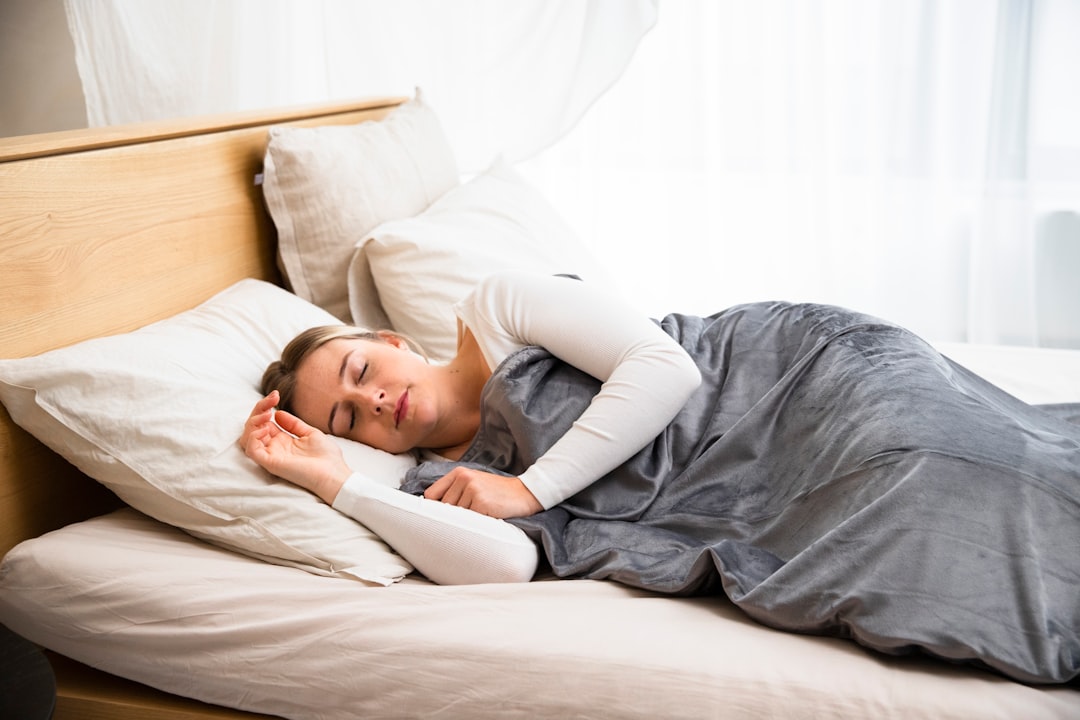
You poured your final cup of coffee at 3:30 PM to survive a brutal afternoon meeting. By 11:00 PM, you crawled into bed, exhausted. Yet an hour later, your body is heavy, your mind is racing, and you find yourself staring at the ceiling wondering why sleep feels impossible.
Most people blame stress, blue light, or a wandering mind. In reality, that mid-afternoon latte is still actively circulating through your bloodstream, locking down the receptors in your brain designed to induce deep, restorative slumber.
Understanding the connection between caffeine and sleep timing is one of the highest-leverage tweaks you can make to your daily energy levels. When you align your caffeine consumption with your body’s natural biochemistry, you get all the cognitive perks of coffee without sacrificing the quality of your sleep.
The Biological Clockwork: How Caffeine Hijacks Your Sleep Drive
To master your caffeine intake, you first need to understand how your brain tracks fatigue. Throughout the day, every cell in your brain consumes energy in the form of ATP (adenosine triphosphate). As ATP breaks down, a byproduct called adenosine accumulates in your brain tissue.
Adenosine and Sleep Pressure
Think of adenosine as a biological hourglass. From the minute you wake up, adenosine steadily piles up, binding to specific adenosine receptors across the central nervous system. As more receptors fill up, you experience a growing sensation known as “sleep pressure.” By the end of a 16-hour day, high adenosine concentrations signal to your brain that it is time for rest.
Caffeine is an impostor. Structurally, caffeine molecules closely resemble adenosine. When caffeine enters your bloodstream, it crosses the blood-brain barrier and docks directly into adenosine receptor sites. Because it fits into the lock without turning the key, caffeine effectively blocks adenosine from binding.
The adenosine doesn’t vanish; it continues to pool outside the blocked receptors. You feel awake because your brain cannot register its own fatigue. Once your liver finally metabolizes the caffeine, that massive wave of accumulated adenosine rushes into the newly freed receptors all at once—triggering the infamous afternoon caffeine crash.
Key Takeaway: Caffeine does not create genuine cellular energy; it merely blinds your brain to its own mounting biological need for sleep.
The Half-Life and Quarter-Life Trap
Most people assume that a cup of coffee wears off after two or three hours because the noticeable jitteriness fades. Pharmacologically, however, caffeine has an average half-life of 5 to 7 hours and a quarter-life of 10 to 12 hours.
Consider what this means in practice:
- 2:00 PM: You drink a large mug of drip coffee containing roughly 200 mg of caffeine.
- 7:30 PM: Your body has metabolized only half of it. You still have 100 mg active in your system—equivalent to drinking a full shot of espresso right before dinner.
- 1:00 AM: About 50 mg of caffeine remains active in your brain tissue while you attempt to enter restorative sleep stages.
Even if you are someone who claims, “I can drink an espresso at 9:00 PM and fall asleep instantly,” your internal architecture tells a different story. Caffeine significantly degrades sleep architecture even when sleep latency (the time it takes to fall asleep) feels normal.
What the Science Says About Caffeine and Sleep Timing
The relationship between caffeine and sleep timing has been documented extensively in clinical sleep laboratories. Groundbreaking research published by the National Institutes of Health evaluated how administering 400 mg of caffeine at three distinct intervals—zero, three, and six hours before bedtime—impacted sleep quality.
The findings were striking:
- Caffeine consumed 0 hours before bed reduced total sleep time by over an hour.
- Caffeine consumed 3 hours before bed reduced total sleep time by over an hour.
- Caffeine consumed 6 full hours before bed still caused a measurable loss of more than one hour of total sleep duration.
Crucially, participants in the six-hour group could not subjectively perceive the sleep disruption. While their objective sleep monitors recorded significant restless movement and reduced sleep efficiency, the participants reported feeling like they slept fine. This highlights a dangerous disconnect: caffeine can quietly sabotage your recovery without your conscious awareness.
Micro-Arousals and Depleted Deep Sleep
Beyond total hours slept, the interaction between caffeine and sleep timing dictates how much time you spend inside critical stages of deep sleep (slow-wave sleep) and REM sleep. Slow-wave sleep is the phase where physical tissue repairs, human growth hormone is released, and metabolic waste is cleared from the brain via the glymphatic system.
Caffeine reduces the amplitude of slow-wave electrical brainwaves. It also causes “micro-arousals”—brief, subconscious transitions into lighter sleep stages that fragment your rest. You wake up feeling unrefreshed, reach for a morning coffee to shake off the grogginess, and inadvertently initiate a vicious cycle of daytime stimulation and nighttime sleep degradation.
How to Calculate Your Personal Caffeine Cutoff Time
There is no universal bedtime rule that applies equally to every human. Individual responses to caffeine vary dramatically based on genetics, metabolic rate, age, and daily habits.
1. Identify Your Genetic Metabolism Rate
Your liver processes caffeine using an enzyme called CYP1A2. Genetic variations dictate how efficiently this enzyme operates:
- Fast Metabolizers (homozygous for the CYP1A2*1A allele): These individuals clear caffeine rapidly from the bloodstream. A cutoff window of 8 to 9 hours before bedtime is typically sufficient.
- Slow Metabolizers (carriers of the CYP1A2*1F variant): These individuals process caffeine at a sluggish rate. Caffeine lingers in their system for up to 12 hours, meaning a 1:00 PM tea can easily disrupt midnight sleep.
- Other Factors: Oral contraceptives, pregnancy, and certain medications can double the half-life of caffeine, while cigarette smoking accelerates its clearance.
2. Factor in Your Total Dose
Timing cannot be viewed in isolation from dosage. A 30 mg cup of green tea consumed at 4:00 PM will have a negligible impact compared to a 300 mg double-shot cold brew consumed at the same time.
Here is a quick reference for common caffeine sources:
- Standard Drip Coffee (8 oz): 95–165 mg
- Cold Brew Coffee (12 oz): 150–240 mg
- Espresso (1 shot / 1 oz): 64 mg
- Matcha Green Tea (1 tsp powder): 60–70 mg
- Black Tea (8 oz): 40–70 mg
- Dark Chocolate (1.5 oz / 70% cacao): 30–50 mg
- Decaf Coffee (8 oz): 2–15 mg
Key Takeaway: High-dose caffeinated beverages (like cold brew or pre-workout supplements) require a much earlier cutoff time than lower-dose alternatives like green tea.
3. The Golden Formula for Caffeine and Sleep Timing
To protect your natural evening wind-down routine and ensure deep physical restoration, use this simple formula:
Target Bedtime − 9 to 10 Hours = Your Daily Caffeine Curfew
If you aim to be asleep by 10:30 PM, your last sip of caffeine should ideally occur between 12:30 PM and 1:30 PM. If you are a slow metabolizer or frequently suffer from fragmented sleep, expand that buffer to 12 hours (10:30 AM cutoff).
Smarter Ways to Beat the Afternoon Slump (Without Stimulants)
Establishing an earlier cutoff time often leaves people wondering how to survive the dreaded 2:00 PM energy lull. Fortunately, afternoon fatigue is usually driven by circadian dips and dehydration rather than an actual chemical lack of caffeine.
Try these science-backed alternatives to revitalize your focus after your daily cutoff window closes:
- Get 10 Minutes of Natural Sunlight: Step outside and expose your eyes to ambient daylight. Natural light suppresses melatonin production and triggers a healthy cortisol pulse that resets your focus while optimizing your circadian rhythm.
- Rehydrate with Electrolytes: Mild dehydration mimics mental fatigue. Drink 16 ounces of cold water with a pinch of unrefined sea salt or an electrolyte packet.
- Perform a 5-Minute Movement Snack: A brisk walk around the block, a quick set of bodyweight squats, or light stretching increases cerebral blood flow and clears peripheral adenosine buildup faster than sitting still.
- Harness the “Caffeine Nap” Before Noon: If you must nap, keep it under 20 minutes and complete it before 1:00 PM to avoid depleting your nighttime sleep pressure.
Your Action Step for Today
Optimizing your rest does not mean giving up your beloved morning coffee. It simply means respecting your liver’s metabolic timeline so you can enjoy high daytime performance alongside deep, restorative sleep.
Here is what to do right now:
- Check the clock and determine your desired bedtime for tonight.
- Count backward exactly 9 hours from that time.
- Set a recurring alarm on your phone for that time labeled: “Caffeine Curfew – Switch to Water or Herbal Tea.”
Stick to this curfew for just five consecutive days. You will likely find that you fall asleep faster, wake up with fewer middle-of-the-night interruptions, and experience substantially higher natural energy from the moment your feet hit the floor.

Written by
Indrajit Mukherjee
Engineer by education, passionate coder, stock market enthusiast, and lifelong learner. I write about Growth, Productivity, Money, and Sleep — sharing practical ideas, insights, and lessons to help you work smarter, build better habits, and live a more fulfilling life.