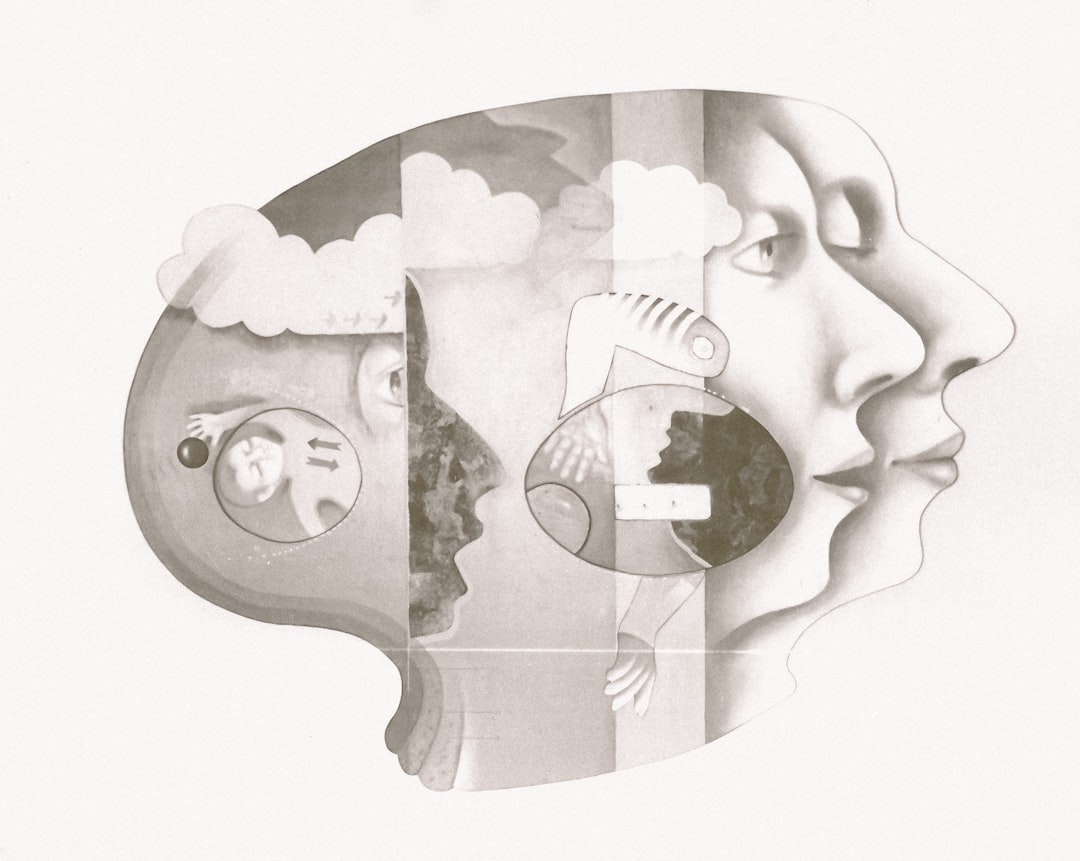
When you strip away your job title, your relationship status, or the city you lived in for a decade, who is actually left looking back in the mirror?
For most of us, an unexpected disruption—a sudden layoff, a messy divorce, an unexpected health diagnosis, or even a long-awaited retirement—doesn't just dismantle our routines. It triggers an existential shockwave. You wake up on a Tuesday morning and realize the script you spent years memorizing has been tossed out the window, leaving you without lines, direction, or a clear role to play.
Psychologists call this experience identity disruption. When the external structures that define you collapse, your brain registers the loss almost like physical grief. Navigating the process of rebuilding identity after change isn't about slapping on a forced smile and pretending nothing happened; it requires a deliberate, step-by-step process of deconstruction, curiosity, and intentional reconstruction.
Whether you're starting over by choice or by circumstance, here is how to reclaim your sense of self and build an identity that feels grounded, authentic, and resilient.
The Anatomy of Identity Loss: Why Transitions Shake Us
We rarely build our identity out of pure self-reflection. Instead, we assemble it out of external feedback loops: performance reviews, partner dynamics, social circles, and daily obligations. Over time, these roles become psychological shortcuts that answer life's most complex question: Who am I?
According to research on human identity and self-concept, we create mental schemas to organize how we view our capabilities, values, and social positions. When an external anchor disappears, that schema shatters.
The Role-Based Identity Trap
The most common vulnerability is over-indexing on a single pillar of your life. If you define yourself entirely as "a tech executive," a round of corporate restructuring doesn't just take your paycheck—it wipes out your purpose. If you define yourself solely as "Marcus's partner," a breakup leaves you feeling like a ghost in your own life.
When you attach your self-worth exclusively to temporary roles, any transition feels catastrophic. The goal is not to avoid caring about your roles, but to separate the actor from the part you're currently playing.
The Narrative Vacuum
Human beings are meaning-making creatures. We make sense of our days by telling ourselves a coherent story: "I work hard here so I can achieve this goal, which will provide safety for my family."
A major life pivot abruptly breaks the plotline. You find yourself stuck in what anthropologist Victor Turner termed the "liminal space"—the uncomfortable, foggy threshold between who you were and who you are going to become.
Key Takeaway: Identity disorientation after a major disruption is not a personal failure or a sign of weakness. It is a predictable psychological response to the sudden loss of your primary feedback loops.
Phase 1: Grieving and Untangling the Old Self
You cannot paint a new canvas while clinging desperately to the scrap paper of your past. Before you can begin constructing a new reality, you have to process what ended.
1. Name the Ambiguous Loss
When someone passes away, society gives us rituals: funerals, sympathy cards, and bereavement leave. But when you lose a career path, an identity as an athlete, or a shared dream of the future, there is no formal service. This is known as ambiguous loss.
Give yourself permission to mourn the loss of what was. Write out an uncensored list of what you miss about your previous life—and, just as importantly, what you don't miss. Acknowledging these complex feelings is an essential part of cultivating emotional resilience during hard seasons.
2. Separate Your Core Self from Your Circumstances
Grab a notebook and draw two columns. In the left column, list the circumstantial labels you lost (e.g., "Senior Project Manager," "Married Homeowner," "Marathon Runner"). In the right column, extract the underlying character traits that made you effective in those roles:
- Lost Role: Senior Project Manager → Underlying Trait: Strategic planner, calm under pressure, natural mediator.
- Lost Role: Partner in a 10-year marriage → Underlying Trait: Deep capacity for loyalty, thoughtful communicator, generous host.
- Lost Role: Injured Athlete → Underlying Trait: High discipline, physical grit, appreciation for mastery.
Your roles were simply outlets for your underlying qualities. The outlet may be closed, but the current of your personal strengths is still fully charged.
Phase 2: The Discovery Zone (Running Low-Stakes Experiments)
When you approach rebuilding identity after change with curiosity rather than panic, you realize something liberating: you don't have to figure out the rest of your life today. You only need to discover what resonates with you right now.
Clarify Values Over Setting Rigid Goals
Traditional goal-setting often fails during major identity pivots because goals are rooted in an outcome you may not even want anymore. Instead of asking, "What do I want to achieve next year?" ask, "Which core values do I want to prioritize this week?"
Common values to anchor to include:
- Autonomy: Making choices independent of others' expectations.
- Craftsmanship: Immersing yourself in the joy of creating something well.
- Connection: Prioritizing deep, authentic relational bonds.
- Vitality: Restoring your physical energy and mental clarity.
- Curiosity: Exploring new subjects without needing to monetize or master them.
Test "Possible Selves" with Micro-Experiments
A critical stage in rebuilding identity after change is running low-stakes behavioral experiments rather than making sweeping lifestyle declarations. Don't immediately commit to a four-year degree or a cross-country move. Test micro-versions of alternative identities instead:
- Curious about entrepreneurship? Sell one digital product, consult for 5 hours, or join a local founder meetup before quitting your safety net.
- Wondering if you're a creative? Commit to writing 250 words a day for two weeks using simple habit tracking strategies.
- Craving a slower lifestyle? Spend one weekend completely disconnected from social media and professional obligations before deciding to move off-grid.
By treating your new life as a series of low-risk prototypes, you reduce the pressure to get everything right on the first try.
Key Takeaway: Identity isn't found through deep isolation or overthinking; it is discovered through active participation. Action generates clarity faster than contemplation ever will.
Phase 3: Anchoring Your New Identity Through Daily Evidence
The final phase of rebuilding identity after change requires anchoring your new narrative in tangible daily habits. You cannot simply think your way into a new way of acting; you must act your way into a new way of thinking.
1. Collect Micro-Evidence Every Morning
Every action you take is a vote for the type of person you wish to become. If you want to view yourself as healthy, drinking a glass of water and taking a ten-minute walk first thing in the morning provides undeniable proof. You can support this mindset by designing a morning routine for mental clarity that aligns with your emerging values.
Keep a daily "Evidence Journal." At the end of every evening, write down three specific things you did that align with your new values:
- "I spoke up candidly in that meeting → Evidence that I value honesty over people-pleasing."
- "I cooked dinner at home instead of ordering takeout → Evidence that I am nurturing my physical body."
- "I spent 20 minutes reading history → Evidence that I am an intellectually curious person."
2. Audit Your Social Mirror
Sociologist Charles Horton Cooley coined the phrase "the looking-glass self" to describe how our self-concept is heavily shaped by how we believe other people perceive us.
If you spend all your time around people who still view you as "the stressed corporate lawyer" or "the fun party guy," their expectations will constantly pull you backward. You don't have to cut out lifelong friends, but you do need to actively seek out spaces where people recognize, respect, and reinforce the person you are evolving into today.
Your Action Step for Today: The 15-Minute "Core Self" Audit
You don't need a year on a mountaintop to start your reinvention. You can begin the process right now in just 15 minutes.
- Grab a blank piece of paper and divide it into two columns: What I am leaving behind and What remains true about me.
- In Column 1: Write down 3 identities, expectations, or assumptions that no longer serve you or no longer match your reality.
- In Column 2: Write down 3 enduring strengths, passions, or character traits that cannot be taken away by any job loss, breakup, or life event.
- Choose one tiny action for tomorrow that directly expresses one of the traits in Column 2.
Transitions are messy, disorienting, and uncomfortable. But they also offer a rare gift: the opportunity to stop living by default and start designing who you are on purpose. Remember, rebuilding identity after change is not an overnight fix—it is an empowering, daily practice of intentional self-authorship.

Written by
Indrajit Mukherjee
Engineer by education, passionate coder, stock market enthusiast, and lifelong learner. I write about Growth, Productivity, Money, and Sleep — sharing practical ideas, insights, and lessons to help you work smarter, build better habits, and live a more fulfilling life.