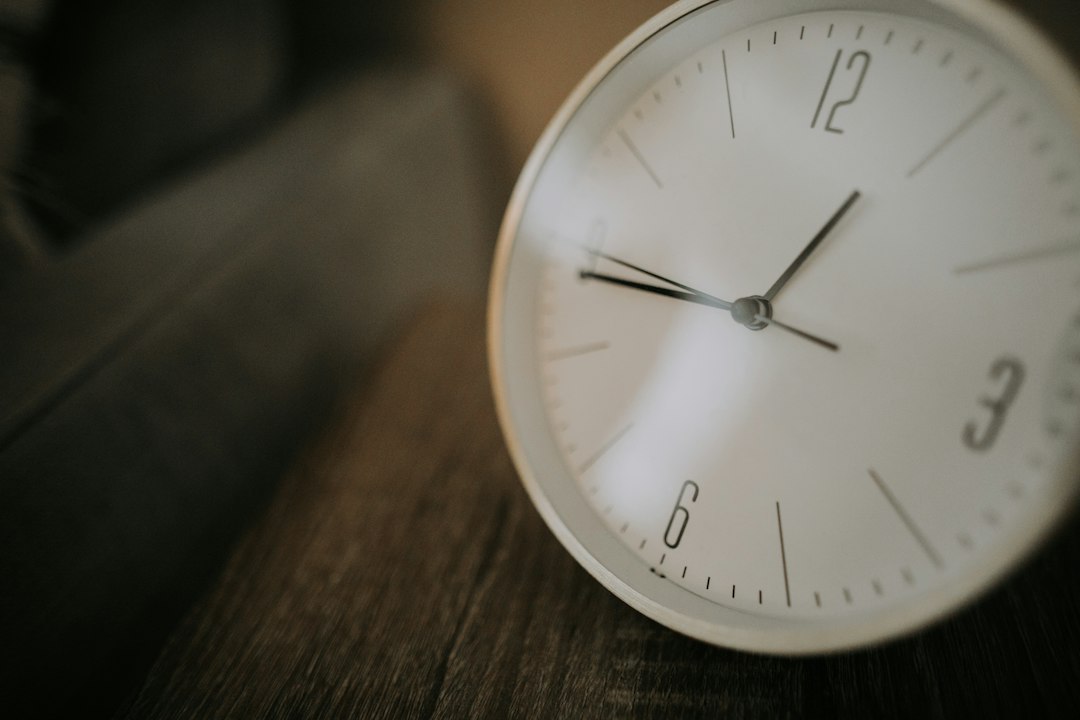
You sit down at 2:00 PM with three hours blocked on your calendar for high-priority strategy work. You have the time, your notifications are silenced, and your coffee is fresh. Yet, thirty minutes in, you are rereading the same paragraph for the fourth time, fighting brain fog, and desperately seeking any excuse to check your inbox.
Traditional time management taught you that an hour is an hour. But biologically, that is a complete lie. An hour of cognitive effort at 9:30 AM when your brain is firing on all cylinders is vastly different from an hour at 2:30 PM during a natural circadian slump.
When you force your brain to perform high-stakes cognitive tasks during biological troughs, you do not just work slower—you actively deplete your reserves, triggering afternoon exhaustion and evening burnout. The solution is not tighter scheduling or more caffeine. It is energy cycling productivity: a dynamic framework that organizes your workday around your body's natural energetic highs and lows rather than the rigid ticks of a clock.
Key Takeaway: Time is a finite, fixed resource, but personal energy is renewable and cyclical. Sustainable performance comes from matching task intensity to your biological capacity, not cramming tasks into empty calendar slots.
Why Traditional Time Management Sets You Up for Burnout
Most productivity systems treat human beings like industrial machines. Calendars assume linear output: eight uninterrupted hours of consistent cognitive performance. However, decades of chronobiology and occupational health research reveal that human energy operates in undulating waves.
As pioneering researchers demonstrated in the landmark study on executive stamina published in the Harvard Business Review, managing energy rather than time is the true driver of high performance. When professionals shift from measuring hours spent working to optimizing the biological energy brought to those hours, productivity surges while chronic fatigue plummets.
Your body runs on two primary biological rhythms:
- Circadian Rhythms: 24-hour cycles that regulate sleepiness, alertness, core body temperature, and hormone production (like cortisol and melatonin).
- Ultradian Rhythms: 90- to 120-minute sub-cycles throughout the day where your brain transitions from peak alertness into temporary mental fatigue.
When you ignore these natural cycles and push through an ultradian trough with sheer willpower, your body releases stress hormones to keep you alert. While this keeps you typing, it degrades working memory, increases error rates, and sets off a steep energy crash later in the afternoon. Implementing energy cycling productivity aligns your demands with these internal waves so you work with your biology, not against it.
The 4 Energy Task Quadrants
To implement an effective energy cycling system, you must stop organizing your to-do list purely by deadline or priority. Instead, you need to categorize every work item by its cognitive and metabolic load.
1. Deep Focus Tasks (High Mental / Low Kinetic)
These tasks require intense executive function, working memory, creative problem-solving, or critical synthesis. Examples include writing code, drafting long-form reports, strategic planning, and financial modeling. These belong exclusively in your peak circadian windows.
2. Active Collaboration Tasks (Medium Mental / High Kinetic)
Brainstorming sessions, pitch presentations, collaborative workshops, and team standups require social presence and vocal energy. Because social interaction naturally stimulates adrenaline and dopamine, these tasks can safely be scheduled during moderate energy windows.
3. Administrative Maintenance (Low Mental / Low Kinetic)
Expense reporting, filing tickets, updating CRM entries, sorting files, and routine email triage require minimal creative problem-solving. Placing these in your energy troughs protects your peak hours from low-value drain.
4. Active Recovery (Zero Work / Recharging)
Non-screen movement, hydration, breathwork, short walks outdoors, and light stretching. Active recovery is not "wasted time"—it is the biological prerequisite for your next high-output wave. Learning to build active recovery strategies directly into your schedule prevents mid-day collapse.
How to Build Your Daily Energy Cycling Workflow
Transitioning to an energy cycling model does not require overhauling your entire job description. It simply means reorganizing when and how you execute existing responsibilities. Follow this four-step blueprint to construct your system.
Step 1: Map Your Personal Chronotype
Everyone experiences alertness peaks and dips at slightly different times based on their genetic chronotype. Before designing your schedule, spend 3 to 5 days tracking your natural alertness levels on a simple 1-to-10 scale at three fixed intervals: morning, early afternoon, and late afternoon.
Most people fall into a standard pattern: an alertness peak 2–4 hours after waking, a natural post-prandial dip between 1:00 PM and 3:00 PM, and a secondary, lighter recovery peak around 4:30 PM to 6:30 PM. Pairing this data with chronotype-based scheduling gives you the exact blueprint for your high-leverage work blocks.
Step 2: Implement 90-Minute Ultradian Sprints
Rather than working across open-ended four-hour blocks, slice your deep-focus projects into 90-minute bounded sprints. The human brain can maintain peak physiological focus for roughly 75 to 90 minutes before oxygen consumption in the prefrontal cortex declines and attention wanders.
- Minutes 0–10: Ramp-up and single-task setup (closing extraneous tabs, defining sprint goals).
- Minutes 10–75: Uninterrupted deep execution with zero task-switching.
- Minutes 75–90: Sprint wrap-up, documenting your stopping point to eliminate cognitive residue.
Step 3: Insert Non-Negotiable Oscillations
The core premise of energy cycling productivity is that high output must be balanced with deliberate de-escalation. After every 90-minute focus sprint, schedule a mandatory 15- to 20-minute biological buffer. This is not the time to scroll social media or read the news—both of which cause subtle cognitive strain. Instead, get away from screens, drink 16 ounces of water, step into natural sunlight, or complete light physical movement.
Key Takeaway: Rest is not a reward you earn after exhausting yourself; it is a vital operational phase required to produce your best work.
Step 4: Protect Your "Trough" with Low-Cognition Batching
When the afternoon circadian dip hits (typically 1:30 PM to 3:30 PM), do not fight it with high-stakes creative work. Batch all low-leverage administrative tasks into this specific window. Clearing out routine logistics, replying to non-urgent messages, and cleaning up project boards require little creative bandwidth, allowing your brain to coast without dropping the ball on everyday operations.
Overcoming Real-World Roadblocks
While the theory of energy management is straightforward, modern workplaces present distinct challenges. Here is how to keep your energy cycling intact amid real-world constraints.
Handling Unavoidable Peak-Hour Meetings
If a client or manager books a recurring meeting during your prime morning focus window, do not abandon the framework. Shift your deep-work block to your secondary recovery peak in the late afternoon, or negotiate asynchronous updates where appropriate. Pairing this with robust deep focus routines will help you regain momentum rapidly even after unexpected schedule disruptions.
Navigating High-Stress Sprints Without Exhaustion
During heavy project launches or crunch weeks, work demands inevitably spike. The instinct is to cut breaks and extend working hours. However, under high stress, energy cycling becomes even more critical. Shorten your work pulses to 50 minutes followed by 10 minutes of active physical decompression. Maintaining these micro-cycles prevents systemic nervous system fatigue when workloads peak.
Your 10-Minute Energy Audit: Take Action Today
You do not need to wait until next quarter to experience fatigue-free output. You can start adopting energy cycling productivity today with this 10-minute exercise:
- Identify your single heaviest task for tomorrow: Choose the one project requiring the most intense problem-solving or creative thought.
- Locate your biological peak: For most people, this is between 9:00 AM and 11:30 AM. Block an uninterrupted 90-minute window inside that zone.
- Move low-stakes admin to 2:00 PM: Relocate all inbox management, scheduling, and routine paperwork to your afternoon trough.
- Set a timer for a 15-minute screen-free buffer: When your morning sprint ends, immediately step away from your desk before touching your next task.
Stop managing your minutes as if you were a clockwork engine. Master your energetic cycles, honor your biological recovery needs, and build a productive routine that fuels your goals without draining your life.

Written by
Indrajit Mukherjee
Engineer by education, passionate coder, stock market enthusiast, and lifelong learner. I write about Growth, Productivity, Money, and Sleep — sharing practical ideas, insights, and lessons to help you work smarter, build better habits, and live a more fulfilling life.