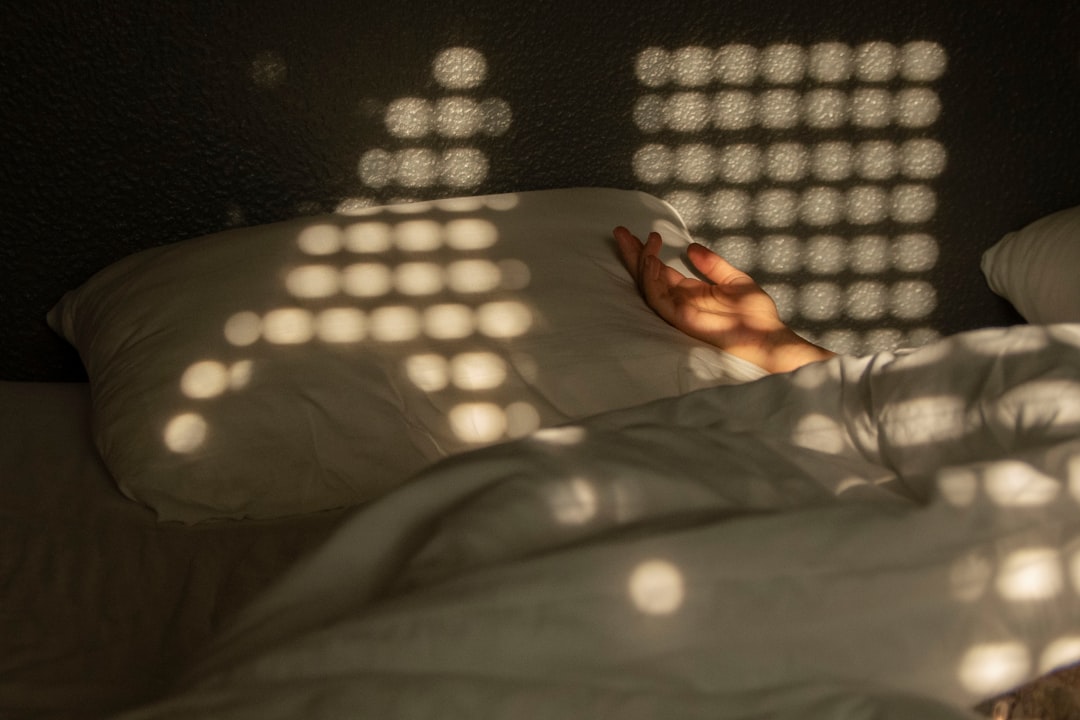
If you have ever forced yourself into bed at 10:00 PM because productivity gurus swore by a 5:00 AM wake-up call, only to spend two hours staring at the ceiling, you are not broken. You are simply operating against your innate biology.
The standard advice of "early to bed, early to rise" treats human beings as identical clockwork machines. Modern sleep medicine tells a completely different story. Your internal timing is governed by genetic variations that regulate your core body temperature, hormone production, and cellular repair cycles. Trying to force an arbitrary schedule onto a mismatched biological clock causes chronic "social jetlag"—a persistent state of circadian disruption linked to brain fog, metabolic slowing, and elevated cortisol.
Finding the best bedtime chronotype match for your biology is the most effective way to eliminate morning grogginess and fall asleep effortlessly without sleep aids. Here is the science behind sleep chronotypes and how to pinpoint your exact sleep window.
Key Takeaway: Your chronotype is genetically predetermined, not a matter of willpower or discipline. Aligning your sleep schedule with your biological chronotype optimizes sleep architecture, leading to more deep (slow-wave) and REM sleep even if total hours remain identical.
What Is a Chronotype (and Why Does It Dictate Your Sleep Window)?
While your circadian rhythm is the roughly 24-hour internal cycle that responds to light and dark cues, your chronotype is your body's natural propensity to sleep at specific times during that 24-hour cycle. Scientists have tied these variations directly to clock genes such as PER3, which influence how rapidly your body builds up adenosine (sleep pressure) and when your pineal gland begins releasing melatonin.
According to research from the Sleep Foundation on chronotypes, these natural tendencies fall along a broad spectrum, traditionally categorized into four distinct animal archetypes popularized by clinical psychologist Dr. Michael Breus: the Bear, the Lion, the Wolf, and the Dolphin.
Ignoring this genetic baseline to chase an unnatural schedule leads to fragmented sleep cycles. Conversely, matching your sleep schedule to your chronotype ensures that you hit peak melatonin levels precisely when your head hits the pillow.
The 4 Primary Chronotypes and Their Ideal Sleep Schedules
Understanding where you fall on the spectrum allows you to determine the best bedtime chronotype pairing for consistent daily energy.
1. The Lion (Early Morning Type)
Population: Roughly 15% to 20% of people.
Lions are natural early birds. They wake up before dawn with immediate mental clarity, hit peak productivity before noon, and naturally run out of steam by early evening. Lions rarely need an alarm and typically struggle to maintain social energy past 9:00 PM.
- Ideal Bedtime: 9:30 PM – 10:00 PM
- Ideal Wake Time: 5:30 AM – 6:00 AM
- Peak Cognitive Window: 8:00 AM – 12:00 PM
- Common Pitfall: The mid-afternoon crash. Lions experience a sharp drop in alertness around 2:00 PM and should avoid booking critical creative tasks during late afternoons.
2. The Bear (Solar/Intermediate Type)
Population: Roughly 50% to 55% of people.
The Bear is the most common chronotype. Bears' internal clocks track the solar cycle closely: waking with the sun and winding down after sunset. They ease into their mornings, reach high focus by mid-morning, and require a steady 8 hours of sleep to avoid mid-day slumps.
- Ideal Bedtime: 11:00 PM – 11:30 PM
- Ideal Wake Time: 7:00 AM – 7:30 AM
- Peak Cognitive Window: 10:00 AM – 2:00 PM
- Common Pitfall: Hitting the snooze button repeatedly. Bears need strategic morning sunlight exposure to trigger cortisol release and halt residual melatonin production quickly.
3. The Wolf (Late Evening Type)
Population: Roughly 15% to 20% of people.
Wolves are authentic "night owls." Their bodies produce melatonin significantly later in the night than other chronotypes. They despise early mornings, experience significant sleep inertia (grogginess) upon waking, and find their cognitive stride in the late afternoon and late evening hours.
- Ideal Bedtime: 12:00 AM – 1:00 AM
- Ideal Wake Time: 8:00 AM – 9:00 AM
- Peak Cognitive Window: 4:00 PM – 9:00 PM
- Common Pitfall: Going to bed prematurely due to societal expectations, lying awake for hours, and labeling themselves as insomniacs. Wolves thrive when they protect their late-night focus window.
4. The Dolphin (Light/Irregular Sleep Type)
Population: Roughly 10% of people.
Named after dolphins that sleep with only one brain hemisphere at a time to stay alert for predators, human Dolphins are light, fitful sleepers with high nervous system activation. They are often highly detail-oriented, perfectionistic, and prone to racing thoughts at bedtime.
- Ideal Bedtime: 11:30 PM – 12:00 AM
- Ideal Wake Time: 6:30 AM – 7:00 AM
- Peak Cognitive Window: 3:00 PM – 7:00 PM
- Common Pitfall: Spending too much time awake in bed. Dolphins benefit from slightly shorter, highly consolidated sleep windows combined with optimizing your evening wind-down routine to lower somatic arousal.
Key Takeaway: If you are a Wolf forced into an 8:00 AM corporate schedule, you do not need to sleep at 9:00 PM. You need sleep consolidation strategies and bright morning light to nudge your phase forward while still prioritizing your natural biological window.
The 3-Step Audit: Finding Your Best Bedtime Chronotype Window
Calculating your best bedtime chronotype schedule requires looking at behavioral patterns during low-stress periods rather than your forced workweek routine.
Step 1: Track the "Free Day" Natural Wake Time
Think about what happens when you are on vacation or have four consecutive days without an alarm clock, alcohol, or intense sleep deprivation. What time do you naturally open your eyes? Subtract 7.5 to 8 hours from that spontaneous wake-up time to reveal your biological sleep onset threshold.
Step 2: Calculate Your 90-Minute Ultradian Cycles
Human sleep is organized into cycles of roughly 90 minutes, progressing from light sleep through slow-wave deep sleep to REM sleep. Waking up in the middle of a deep sleep cycle produces heavy sleep inertia, regardless of total hours slept.
Aim for 5 complete 90-minute cycles (7.5 hours) or 6 cycles (9 hours). For instance, if your Bear physiology wakes comfortably at 7:00 AM, working backwards by 5 cycles plus a 20-minute buffer to fall asleep pinpoints your ideal lights-out target at 11:10 PM.
Step 3: Track Your Mid-Sleep Point
Sleep researchers often use the "mid-sleep on free days" (MSF) metric to classify chronotypes. If you fall asleep at 1:00 AM and wake at 9:00 AM on days off, your midpoint is 5:00 AM, placing you squarely in the Wolf category. Tracking this metric prevents you from guessing incorrectly based on short-term fatigue.
How to Bridge the Gap Between Your Chronotype and Real Life
The modern world is largely built for Lions and early Bears. If you are a Wolf or Dolphin navigating a strict morning work schedule, pinpointing your best bedtime chronotype alignment can transform how refreshed you feel throughout the week without completely overhauling your career.
1. Anchor Your Melatonin Rhythm with Morning Photons
Light is the master zeitgeber (time-giver) for your brain's suprachiasmatic nucleus. Within 30 minutes of waking, step outside for 10 to 15 minutes of direct sunlight. This suppresses lingering melatonin and sets an internal biochemical timer that triggers natural sleepiness approximately 14 to 16 hours later.
2. Establish a Strict Evening Temperature Drop
Your core body temperature must drop by 1 to 2 degrees Fahrenheit to initiate and sustain deep sleep. Set your bedroom thermostat between 65°F and 68°F (18°C to 20°C). Taking a warm shower 60 to 90 minutes before your target chronotype bedtime pulls blood to the extremities, accelerating this vital core cooling process.
3. Protect Your Sleep Debt Buffer
If your social or professional obligations force you to wake earlier than your chronotype prefers, avoid sleeping in for three extra hours on weekends. Large schedule shifts trigger "social jetlag," making Monday mornings excruciating. Instead, learn practical techniques for managing sleep debt effectively through 20-minute midday power naps between 1:00 PM and 3:00 PM.
Today's Action Step: Calculate Your Ideal Bedtime Tonight
Stop fighting your biology. To find your best bedtime chronotype window tonight, complete this 2-minute formula:
- Identify your target wake time based on your non-negotiable morning responsibilities.
- Subtract 7 hours and 45 minutes (5 complete 90-minute sleep cycles plus a 15-minute natural latency period to drift off).
- Compare this time to your chronotype profile above. If the resulting time falls within your biological bracket, set a recurring "wind-down alert" on your phone for 45 minutes prior to that time starting tonight.
When you synchronize your schedule with your internal biology rather than arbitrary cultural expectations, deep, restorative sleep ceases to be a nightly struggle and becomes your default state.

Written by
Indrajit Mukherjee
Engineer by education, passionate coder, stock market enthusiast, and lifelong learner. I write about Growth, Productivity, Money, and Sleep — sharing practical ideas, insights, and lessons to help you work smarter, build better habits, and live a more fulfilling life.