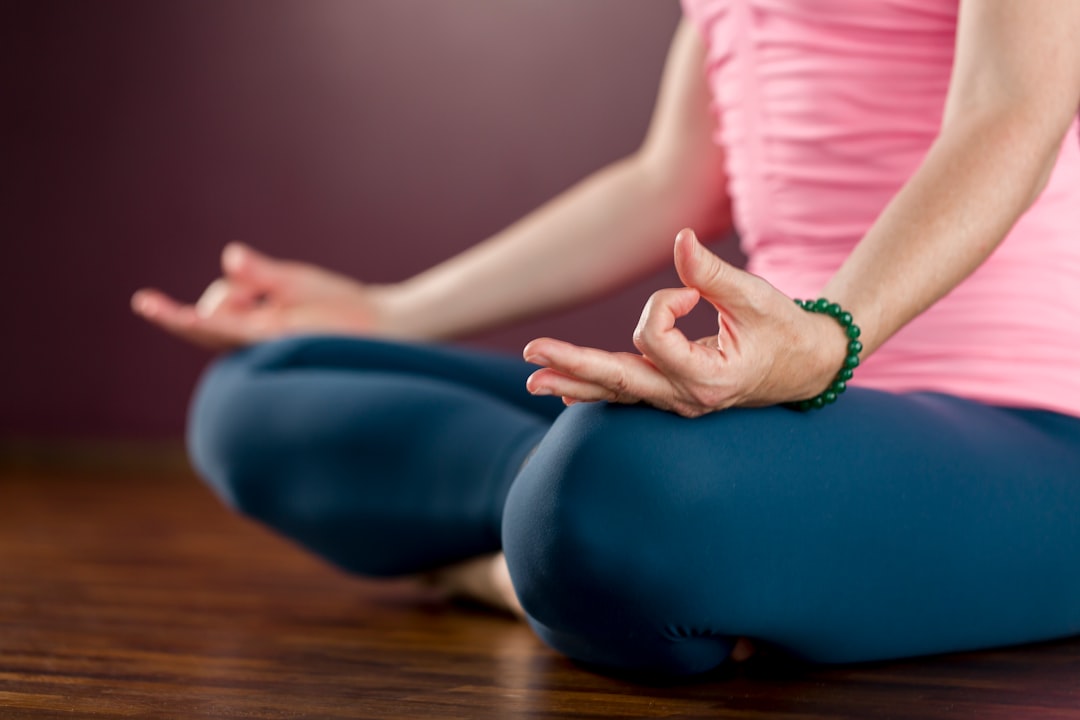
When acute stress hits, your body doesn't care about your afternoon schedule. Your heart rate spikes, your breathing turns shallow, and cortisol floods your bloodstream. Most wellness advice tells you to take a 45-minute yoga class, book a massage, or meditate for half an hour. But when you are caught between back-to-back meetings, juggling a family crisis, or spiraling before a presentation, you don't have 45 minutes—you have three.
The good news is that your autonomic nervous system has built-in physiological "brakes." By leveraging specific somatic inputs, neurobiology, and breath mechanics, you can shift from sympathetic fight-or-flight overdrive into parasympathetic recovery in seconds. These actionable, evidence-based quick stress relief techniques require zero special equipment and can be executed at your desk, in your car, or during a bathroom break.
Key Takeaway: You cannot think your way out of a physiological stress response. To de-escalate rapidly, use bottom-up somatic tools (breath, vision, temperature, and muscle activation) to signal safety directly to your brainstem.
Breathwork Resets: Direct Lines to the Vagus Nerve
Your respiratory system is the only component of your autonomic nervous system that you can consciously override. When you deliberately modify the pace and depth of your breathing, you trigger mechanoreceptors in your lungs that send calming signals via the vagus nerve directly to your heart and brain.
1. The Physiological Sigh (Double Inhale, Extended Exhale)
Identified by neuroscientists as the fastest biological mechanism to reduce autonomic arousal in real time, the physiological sigh takes less than twenty seconds to initiate relief.
- How to do it: Inhale deeply through your nose until your lungs are almost full, then take a sharp, second "top-off" sniff to maximally inflate your alveoli (air sacs). Follow this with a long, slow, unforced exhalation through your mouth until your lungs are empty.
- The Science: When you are stressed, the tiny air sacs in your lungs collapse. The double inhale pops them open, allowing for a rapid offload of carbon dioxide during the extended exhale, which instantly slows your heart rate.
- Protocol: Perform 2 to 3 consecutive cycles whenever you feel an acute spike in panic or tension.
2. Box Breathing (4-4-4-4 Method)
Popularized by tactical operators and emergency responders, box breathing prevents hyperventilation and stabilizes carbon dioxide levels, restoring cognitive clarity under high-pressure scenarios.
- Inhale quietly through your nose for 4 seconds.
- Hold your breath at the top for 4 seconds (without clamping your throat).
- Exhale smoothly through your nose or mouth for 4 seconds.
- Hold your breath empty at the bottom for 4 seconds.
Complete 4 rounds (total time: 64 seconds). This rhythm balances oxygen and carbon dioxide while anchoring scattered mental focus to a predictable count.
3. The Cold Water Dive Reflex
Splashing cold water on your face or applying a cold pack to your eyes and cheekbones triggers the mammalian dive reflex. This evolutionary adaptation immediately stimulates the vagus nerve, causing an involuntary drop in heart rate and redirecting blood flow toward vital organs.
Head to a sink, fill your hands with cold tap water, and immerse your face for 10 to 15 seconds while holding your breath. Alternatively, place an ice cube wrapped in a paper towel against your carotid artery or between your brows for 60 seconds.
Sensory & Cognitive Interrupters: Breaking the Mental Spiral
When mental rumination feeds physical anxiety, you need rapid cognitive patterns to break the feedback loop. These sensory-based quick stress relief techniques pull focus away from catastrophic thinking and anchor your prefrontal cortex in the present moment.
4. The 5-4-3-2-1 Sensory Grounding Technique
When acute anxiety pulls your awareness into future-focused catastrophic thinking, engaging your five senses forces your brain to process immediate physical inputs rather than abstract threats.
- 5 Things you see: Look around and note five distinct visual details (e.g., the grain of wood on your desk, the pattern of light on the wall).
- 4 Things you feel: Notice four tactile sensations (e.g., the soles of your feet on the floor, the texture of your shirt sleeve).
- 3 Things you hear: Identify three ambient sounds (e.g., a distant hum of traffic, the air conditioner).
- 2 Things you smell: Notice two scents (e.g., coffee grounds, hand lotion).
- 1 Thing you taste: Focus on one present taste (e.g., mint, residual tea, or simply the roof of your mouth).
This simple exercise takes roughly 90 seconds and interrupts acute hyperarousal by grounding your sensory processing circuits.
5. Panoramic Gaze (Expanding Peripheral Vision)
When you feel stressed or threatened, your vision instinctively narrows into "focal vision"—a tunnel-vision state designed to track a single focal point. This visual state is intrinsically wired to the sympathetic nervous system.
To manually disrupt this, keep your head still and intentionally soften your eyes. Expand your field of view so you can see the far left, far right, ceiling, and floor simultaneously without darting your eyes. Holding a panoramic gaze for 60 to 90 seconds triggers an involuntary downshift in neurological arousal.
6. The 2-Minute "Worry Purge" (Expressive Brain Dump)
Working memory capacity plummets when working under acute mental overload. Keeping stressors trapped in mental loops consumes vital prefrontal bandwidth. Grabbing a blank piece of paper and writing down every raw, uncensored thought without editing or filtering for 120 seconds creates psychological distance. Externalizing the stressors allows your brain to stop expending energy attempting to rehearse or remember them.
Pairing somatic resets with structured habits—like designing intentional evening wind-down routines—ensures that acute daytime stress doesn't compound into nighttime insomnia.
Somatic & Muscular Releases: Discharging Stored Tension
Stress is fundamentally a full-body event. Muscles contract involuntarily to brace against impact, particularly in the jaw, shoulders, and hip flexors. Releasing physical tension sends feedback along afferent nerve pathways to tell the brain the crisis is over.
7. The 90-Second Progressive Micro-Squeeze
Standard progressive muscle relaxation can take 20 minutes, but a condensed version produces rapid results by deliberately amplifying tension before releasing it, triggering a deep relaxation response in targeted muscle groups.
- Hunch your shoulders up to your ears, clench your fists tightly, and squeeze your facial muscles.
- Hold this maximum contraction while holding a full inhale for 7 to 10 seconds.
- Exhale forcefully and release every muscle simultaneously, letting your arms and shoulders drop limp.
- Repeat twice. Notice the warm, heavy sensation of blood rushing back into relaxed muscle tissue.
8. The 60-Second Tremor or Shakeout
Animals in the wild visibly shake their entire bodies after escaping a predator to discharge residual kinetic energy and recalibrate their neuromuscular tone. Humans frequently suppress this impulse, leaving motor tension trapped in postural muscles.
Stand up, unlock your knees, and shake your hands, wrists, shoulders, and legs vigorously for one minute. Let your jaw hang loose and bounce lightly on your heels. This simple movement disperses built-up adrenaline and immediately resets motor hypervigilance.
9. Acupressure on the Yin Tang Point
The Yin Tang point (located directly between the eyebrows, at the "third eye" position) is a well-documented acupressure target for relieving nervous tension, mild headaches, and mental fatigue.
Apply steady, moderate pressure with your index finger or thumb in a slow, clockwise circular motion for 60 to 90 seconds while taking slow nasal breaths. This activates local trigeminal nerve endings that promote systemic calm.
10. Soothing Self-Touch (Hand-on-Heart Compression)
Cutaneous touch releases endogenous oxytocin, a hormone that directly buffers the physiological effects of cortisol. When stress feels emotionally overwhelming, simple self-soothing touch communicates safety to your mammalian attachment system.
Place your right palm firmly over the center of your chest, and place your left hand gently over your abdomen. Apply light, supportive pressure. Feel the rise and fall of your chest underneath your palms for 60 seconds. This physical contact reduces autonomic agitation and softens internal distress.
Key Takeaway: Chronic stress is sustained by ignoring physical symptoms. Integrating these quick stress relief techniques across your workday prevents acute strain from transforming into burnout and helps in managing chronic cortisol spikes.
How to Match the Technique to Your Stress State
Not all stress feels the same. Applying the right tool to your specific stress state produces significantly faster results than using a generic strategy.
- When you feel acute panic or a racing heart: Use The Physiological Sigh or The Cold Water Dive Reflex.
- When your thoughts are spinning out of control: Use Panoramic Gaze or the 5-4-3-2-1 Grounding Technique.
- When you feel physically frozen, stiff, or irritable: Use the 60-Second Shakeout or Progressive Micro-Squeeze.
- When you are emotionally overwhelmed or depleted: Use Hand-on-Heart Compression or the Yin Tang Acupressure Point.
Mastering these quick interventions during waking hours will also improve your restorative recovery at night, especially when combined with optimizing your sleep environment for deeper rest.
Your Immediate Action Step
You don't need to wait for a full-blown crisis to practice these methods. Take 60 seconds right now to perform three physiological sighs: inhale deeply through your nose, take a second quick sniff at the top to fully fill your lungs, and let out a long, slow sigh through your mouth. Notice the subtle drop in your shoulders and the clearing of mental static. Bookmark this list so you have your five-minute toolkit ready whenever pressure mounts.

Written by
Indrajit Mukherjee
Engineer by education, passionate coder, stock market enthusiast, and lifelong learner. I write about Growth, Productivity, Money, and Sleep — sharing practical ideas, insights, and lessons to help you work smarter, build better habits, and live a more fulfilling life.