Few household chores carry the psychological weight of washing the floors. You drag out a heavy bucket, wait for water to heat, wrestle with a damp string mop, and then banish your family to the couch for an hour while the boards dry—only for someone to track muddy paw prints across the hallway thirty minutes later.
The traditional approach to floor care is broken because it relies on periodic, exhausting deep cleans. When you treat floor maintenance as a monumental weekend chore, your floors spend 85% of their life cycle transitioning between visibly dirty and completely neglected.
By adopting a smarter, friction-free system, you can maintain pristine hardwoods, tile, and laminate without ever dedicating a Saturday afternoon to the bucket-and-mop ritual again. Here is how to build a sustainable, effortless floor cleaning routine that takes exactly five minutes a day.
Key Takeaway: Clean floors are not the result of intense scrubbing sessions; they are the byproduct of low-friction prevention and micro-maintenance targeted exclusively at high-traffic zones.
The "Lazy Genius" Philosophy of Floor Care
The term "Lazy Genius"—popularized by author Kendra Adachi—centers on being a genius about the things that matter and lazy about the things that don't. When applied to housekeeping, it means ditching perfectionist standards in favor of high-leverage habits.
Traditional floor cleaning demands that you clear every chair, move rugs, sweep from baseboard to baseboard, and mop entire rooms. That approach creates immense psychological friction. You put it off for weeks because starting requires forty minutes of preparation.
An effortless floor cleaning routine flips this dynamic by establishing three non-negotiable rules:
- Limit scope to the "traffic spine": You do not clean under the credenza or behind the refrigerator daily. You only address the active walking pathways where dirt actually settles.
- Eliminate setup friction: If your tools are stored in the basement, in the back of a closet, or disassembled, you will not use them. Tools must live at the point of performance.
- Prevent over correction: Stopping dirt at your exterior thresholds eliminates roughly 80% of the debris that would otherwise scatter across your living spaces.
The 5-Minute Daily Routine: Minute by Minute
Set a timer on your phone for five minutes. Once you establish the muscle memory, this daily circuit becomes automatic.
Minute 0 to 2: The Dry Zone Sweep
Forget the upright vacuum for daily maintenance. Dragging out a heavy canister vacuum, unspooling cords, and swapping attachments eats up four minutes before you even begin. Instead, use a wide (18-inch) commercial microfiber flat mop with a dry electrostatic pad, or an ultra-light cordless stick vacuum.
Start at the farthest active zone (typically the kitchen island perimeter or back entryway) and sweep down the central hallway toward your primary waste bin. Use long, fluid S-curves without lifting the head off the floor to avoid scattering fine grit. Do not move furniture. Sweep around table legs and continue down the main artery of your home.
Minute 2 to 4: The Targeted Micro-Mop
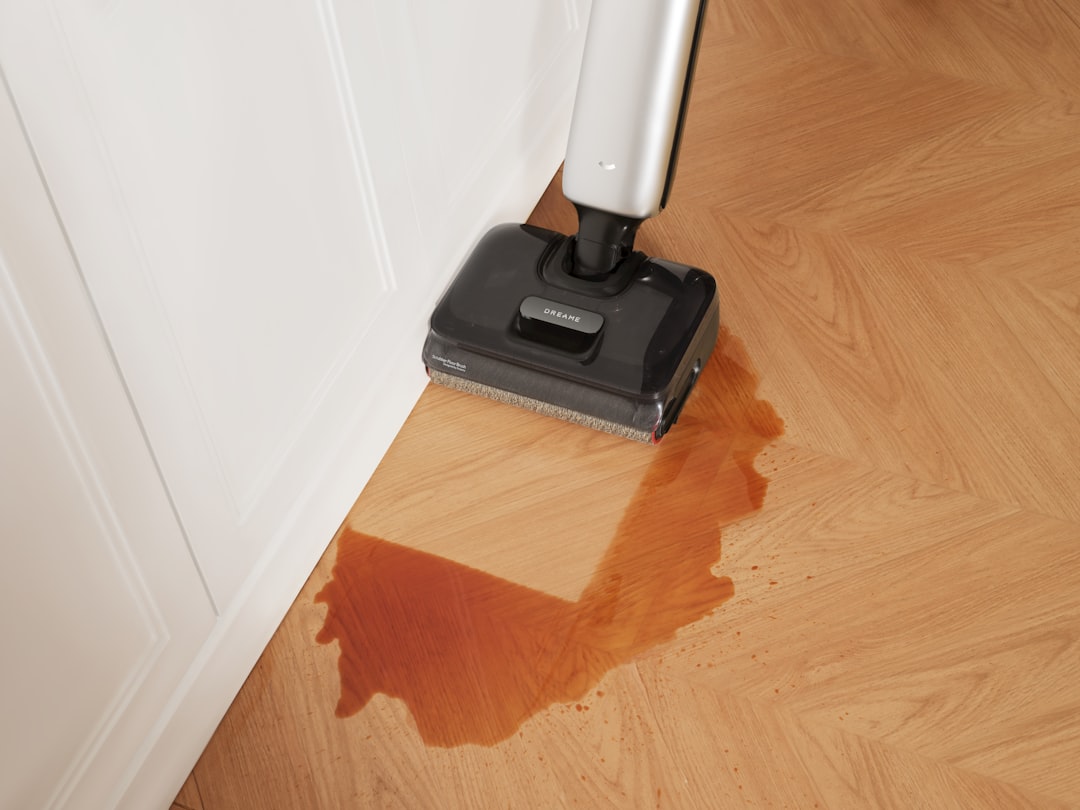
Fill a dual-chamber spray mop with warm water and a splash of neutral cleaner. Lightly mist high-spill zones: directly in front of the kitchen sink, the stove prep area, pet bowl stations, and the primary entry threshold.
According to Environmental Protection Agency research on indoor particulate matter, indoor dust contains a mix of outdoor soil, pollen, and biological particulates that settle rapidly on hard surfaces. Microfiber binds these fine particles through mechanical attraction rather than spreading dirty water around like conventional cotton mops.
Make two quick passes over each damp spot. Because you use a fine mist rather than saturated water, the floor dries in under ninety seconds, meaning no footprints and no closed-off rooms.
Minute 4 to 5: The Reset and Ejection
Toss the used microfiber pad directly into the laundry basket (keep a stack of 5–7 reusable pads on hand so you always have a fresh one). Return the spray mop to its dedicated hook. Empty the dust cup if you used a stick vacuum, and you are done.
Building Your Low-Friction Floor Kit
An effective low-maintenance cleaning system depends entirely on accessibility. If you have to dig behind an ironing board to reach your broom, the habit collapses. Assemble this streamlined kit and store it directly in or adjacent to your highest-traffic room:
| Tool | Purpose | Storage Location |
|---|---|---|
| 18-inch Microfiber Dry Mop | Daily dry debris and hair pickup | Kitchen pantry wall or utility closet hook |
| Refillable Spray Mop | Spot cleaning spills and sticky spots | Mounted next to the dry mop |
| Washable Microfiber Pads (Multi-pack) | Single-use rotation to prevent dirt transfer | Small bin underneath the kitchen sink |
| Neutral pH Floor Cleaner Concentrate | Streak-free surface cleaning | Under the sink beside replacement pads |
Preventative Defense: The Two-Mat Airlock System
The fastest way to clean floors is to stop dirt from reaching them in the first place. Most household floor grime is tracked in directly from the soles of shoes.
Instead of relying purely on a "no shoes in the house" request that guests or busy family members might forget, install a physical two-mat airlock at every exterior entrance:
- Exterior Scraper Mat: Place a coarse, natural coir or rubber-ribbed scraper mat outside your door. This removes heavy mud, gravel, and large debris from shoe treads.
- Interior Absorption Mat: Place a dense, washable cotton or microfiber runner immediately inside the doorway. This captures fine dust and absorbs moisture before shoes (or socks) step onto hardwood or tile.
Pairing this entryway setup with streamlined shoe storage solutions creates a psychological checkpoint that keeps your floors protected automatically.
Key Takeaway: A dual-mat entryway system traps up to 80% of outdoor dirt and moisture at the door, reducing your daily cleaning surface to a fraction of its original size.
Tailoring the Routine to Your Floor Material
Different materials react differently to water and cleaning agents. Customize your five-minute effortless floor cleaning routine based on your flooring type:
Hardwood Floors (Solid & Engineered)
Hardwood is vulnerable to standing water and acidic chemicals. Never use straight vinegar, ammonia, or steam mops on polyurethane-finished wood, as they break down the protective topcoat over time. Use a pH-neutral cleaner mixed with distilled water in your spray mop, misting sparingly so the liquid evaporates within 60 seconds.
Luxury Vinyl Plank (LVP) and Laminate
While vinyl plank is waterproof, the joints between planks can trap grit if swept with abrasive bristles. Use wide microfiber pads for dry sweeps. For sticky spills, a mild mixture of water and a drop of dish soap inside your spray reservoir works safely without leaving a cloudy film.
Tile and Grout
Tile handles moisture well, but grout lines collect dirty water if you use a saturated string mop. The fine spray technique prevents liquid from pooling inside grout channels, keeping your grout lines lighter for years without specialized scrubbing.
How to Maintain the Habit Without Burning Out
Consistency beats intensity every single time. To make this effortless floor cleaning routine second nature, tether it to an existing habit you already perform daily—a technique known as habit stacking.
Great anchors for your floor routine include:
- Right after clearing the dinner table and starting the dishwasher
- Immediately after letting the dog out for their evening walk
- While your morning coffee brews
By attaching the 5-minute floor circuit to an established habit, you bypass decision fatigue. You don't have to debate whether the floor is "dirty enough" to justify cleaning—you simply execute the five-minute pass as part of your day's rhythm.
Your Action Step for Today
Do not attempt a whole-house deep clean this evening. Instead, take five minutes right now to eliminate tool friction:
- Order or locate an inexpensive spray mop and an extra pack of microfiber pads.
- Clear a designated hook in your pantry or hall closet so the tool is visible and reachable in two seconds flat.
- Fill the reservoir with water and a few drops of gentle everyday cleaning concentrate.
Tomorrow morning, run the 5-minute timer across your main traffic path. Once you experience the feeling of barefoot-ready floors with virtually zero physical effort, you will never look back at the Saturday mop bucket again.

Written by
Nibedita Basu
English graduate and social worker with a passion for creating a warm, happy, and meaningful life. I write about Home, Food, and Pets — sharing practical ideas, everyday inspiration, and simple joys that make life more comfortable, wholesome, and fulfilling.