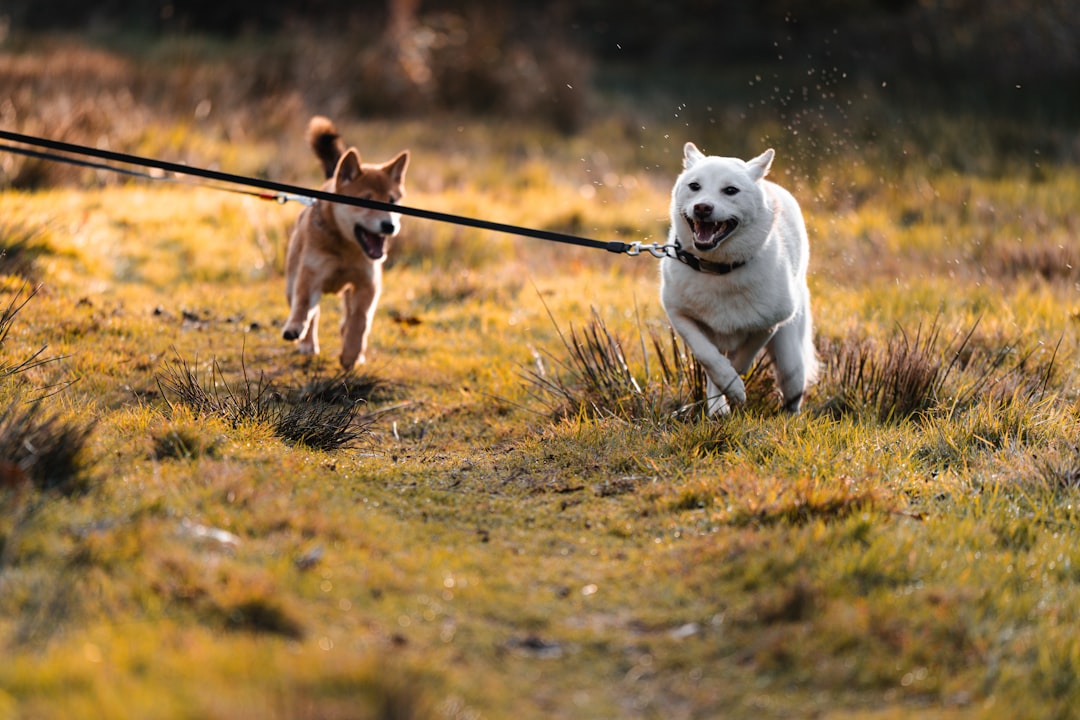
You clip the leash to your dog's collar, step out the front door, and within two seconds, your arm is yanked nearly out of its socket. What was supposed to be a relaxing evening stroll quickly turns into an Olympic-level tug-of-war match, complete with gasping, hacking, and sidewalk frustration.
If your daily walk feels more like being dragged behind a furry sled than enjoying quality time with your best friend, you are far from alone. Leash pulling is the single most common complaint among dog owners. The good news? You do not need choke chains, prong collars, or physical intimidation to fix it. With a clear understanding of canine mechanics and consistent positive reinforcement, you can teach any dog to walk politely on a slack lead.
Key Takeaway: Dogs do not pull because they want to dominate you—they pull because walking faster than humans is their natural default, and pulling gets them where they want to go. Changing this reward loop is the secret to lasting progress.
Why Dogs Pull on the Leash (It Is Not Dominance)
Before you can change the behavior, you must understand why it happens in the first place. For decades, outdated training myths claimed that a dog walking ahead of you was trying to be the "alpha" or "pack leader." Modern canine behavioral science has thoroughly debunked this idea.
1. Natural Walking Speeds
Humans have an average walking pace of about 2.5 to 3 miles per hour. An average medium-sized dog trotting comfortably moves at roughly 4 to 5 miles per hour. When attached to a six-foot strap, our leisurely stroll feels agonizingly slow to them. They are not pulling out of spite; they are simply moving at their natural baseline cadence.
2. The Opposition Reflex
Mammals have an involuntary physical response called the opposition reflex (thigmotaxis). When an animal feels pressure pulling back on its body, its natural instinct is to lean forward and pull against that pressure. When you yank back on the leash, your dog instinctively leans harder into the collar.
3. The Power of Environmental Rewards
Every time your dog pulls toward a fire hydrant, sniffs a fascinating patch of grass, or greets another pup while the leash is taut, the pulling behavior is reinforced. The dog learns a simple formula: Tension on neck = I move forward and get what I want. To successfully stop dog pulling leash habits, you must flip this equation completely upside down.
Essential Gear: Setting Yourself Up for Success
Training mechanics matter, but using the right equipment creates an immediate mechanical advantage without inflicting pain or fear. If you want to teach a dog to walk on a leash without pulling, start by overhauling your walking kit.
The Front-Clip Harness (The Ultimate Tool)
Traditional flat collars and back-clip harnesses act like sled rigs—they give your dog maximum leverage to pull your entire body weight. A front-clip (no-pull) harness attaches the leash to a ring centered on your dog's chest.
When your dog surges forward while wearing a front-clip harness, the leash redirects their momentum back toward you sideways, preventing them from leaning all their horsepower into the pull. It provides gentle mechanical guidance without choking the trachea.
Fixed Leashes vs. Retractable Leashes
Put away the retractable flexi-leash. Retractable leashes actively teach dogs to pull because the dog must apply continuous forward tension to make the cord extend. Instead, use a fixed 5-to-6-foot nylon or biothane leash. This provides a consistent boundary your dog can actually learn.
Gear to Avoid
- Prong and Pinch Collars: These cause discomfort and can induce leash reactivity, fear, and aggression toward triggers.
- Choke Chains: Risk soft tissue damage, collapsed tracheas, and cervical spine injuries.
- Shock / E-Collars: Suppress symptoms temporarily without teaching the dog the desired replacement behavior.
4 Positive Reinforcement Techniques to Stop Leash Pulling
Positive reinforcement is not just "bribing with food"—it is systematic behavioral conditioning. Here are four proven methods to stop dog pulling leash behavior without physical force.
1. The "Be a Tree" Method
This is the classic foundational technique for stopping momentum. The goal is to make pulling 100% ineffective at producing forward motion.
- Begin walking with your dog on a relaxed, loose leash.
- The split second the leash goes taut, freeze in place immediately. Become a stationary tree rooted into the ground.
- Do not jerk the leash, speak, or pull back; simply anchor your hands against your waistline.
- Wait patiently. Eventually, your dog will wonder why forward motion stopped and will turn around, take a step back, or look at you.
- The moment the leash goes slack, mark the moment with a cheerful "Yes!" and immediately resume walking forward.
2. The Direction Change (The U-Turn Game)
If your dog ignores the "Be a Tree" method and continues trying to drag you like a sled anchor, step up the stakes with the U-turn game. This exercise teaches your dog that pulling actually moves them further away from their destination.
Whenever tension hits the leash, say a cheerful cue like "This way!", pivot 180 degrees, and briskly walk in the opposite direction. When your dog turns and catches up to match your new heading, immediately reward them at your hip with a piece of high-value food from your pouch of high-value dog treats. This turns outdoor walks into an interactive focus game.
3. The Hip-Zone Reinforcement Strategy
Dogs repeat behaviors that pay off. If you only correct pulling but never reward good positioning, the dog has no idea where you actually want them to be. You need to create a high-value "Sweet Spot" right beside your thigh.
- Walk forward at a brisk, engaging pace.
- Every 2 to 3 steps that your dog spends within 12 inches of your left (or right) leg with a slack leash, deliver a small, soft treat directly down against your trouser seam.
- Feed them right at your hip—never reach out in front of you to deliver the reward, as that lures them back into pulling position.
- Gradually increase the number of steps between rewards as their muscle memory builds.
4. The "Find It" Scatter for Sniff Breaks
Walking in a strict heel for 30 consecutive minutes is mentally exhausting and unnatural for a dog. Sniffing reduces cortisol levels and is a crucial form of mental enrichment for dogs. Build sniffing into your training as a real-world reward.
After your dog gives you 20 paces of beautiful, loose-leash walking, stop, say "Free!", and toss a handful of treats into the grass saying "Find it!" Let them explore and sniff on a slack line for 60 seconds before asking for loose-leash focus again.
Key Takeaway: Training loose-leash walking is about building value near your leg. If your pocket is full of plain dry kibble, the squirrel across the street will always win. Use real roast chicken, string cheese, or freeze-dried liver when training outdoors.
Step-by-Step Training Protocol: From Living Room to Sidewalk
The biggest mistake pet owners make when trying to stop dog pulling leash habits is starting in the most difficult environment possible: the bustling neighborhood sidewalk. Dogs cannot learn complex motor skills when overstimulated. Progress through these three distinct training stages.
Phase 1: The Zero-Distraction Living Room (Days 1–3)
Put the harness and leash on your dog inside your living room or hallway. There are no squirrels, no other dogs, and no strange scents. Walk back and forth across the room, practicing the hip-zone reinforcement method. Reward every few steps. Within two 5-minute sessions, your dog will be glued to your side because there is zero competing sensory input.
Phase 2: The Driveway and Backyard (Days 4–7)
Move the exact same routine out to your driveway, patio, or fenced backyard. Smells are richer, and breezes carry new distractions, but it remains a controlled space. If your dog pulls toward a garden bed, apply the U-turn technique until they refocus on your hip.
Phase 3: Real-World Sidewalks (Week 2 and Beyond)
Begin your real neighborhood walks, but adjust your expectations. A 10-minute walk where you cover only 100 yards with perfect slack-leash mechanics is vastly superior to a two-mile march where your dog drags you the entire distance. If your pup becomes overwhelmed, increase distance from triggers and return to high-frequency treat delivery.
Common Pitfalls That Sabotage Progress
Even dedicated owners can accidentally undermine their training. Keep these common traps in mind:
- Inconsistency Across Handlers: If you enforce loose-leash rules but your partner or dog walker lets the dog pull freely, your dog will remain confused. Everyone in the household must follow the same "no tension = forward motion" rule. Pair this with clear structure like crate training basics to build overall household consistency.
- Walking Too Slowly: If you crawl at a snail's pace, your dog's impulse control will quickly shatter. Walk with purpose and energy.
- Holding the Leash Too Short: Clamping the leash down to a 10-inch tether keeps permanent tension on the collar, triggering the opposition reflex automatically. Keep your hands relaxed at your center and allow a generous "J-loop" drape in the leash.
- Underestimating High-Stress Triggers: If your dog is barking, lunging, or frantic, they have crossed their threshold. No amount of treat-waving will stop dog pulling leash behavior when a dog is in fight-or-flight panic. Simply turn around and create distance immediately.
Your Action Step for Today
Do not wait for your next full neighborhood walk to begin fixing leash manners. Take five minutes today to clip your dog onto their leash inside your living room with a pouch of cut-up hot dogs or cheese. Walk ten paces back and forth across your floor, heavily rewarding your dog at your hip seam every time the leash remains loose.
By building the foundation in a quiet room today, you lay the groundwork for calm, joyful, arm-strain-free walks for the rest of your dog's life.

Written by
Nibedita Basu
English graduate and social worker with a passion for creating a warm, happy, and meaningful life. I write about Home, Food, and Pets — sharing practical ideas, everyday inspiration, and simple joys that make life more comfortable, wholesome, and fulfilling.